What Size Zero Turn Do I Need for My Acreage?
A step-by-step guide to choosing the right zero-turn deck size and power for your property acreage, terrain, obstacles and mowing time.

On this page
Top picks at a glance
As an Amazon Associate I earn from qualifying purchases.
- 1
 SEATIN Comfortable Zero Turn Mower Seat9.7/10View on Amazon
- 2
 EGO Power+ Z6 Zero Turn Electric Riding Lawn Mower9.6/10View on Amazon
- 3
 Greenworks 60V 54" MaximusZ Zero Turn Mower9.6/10View on Amazon
- 4
 Zero-Turn BarView on Amazon
- 5
 EGO Power+ Rear Bumper for Z6 Zero Turn Riding Lawn MowersView on Amazon
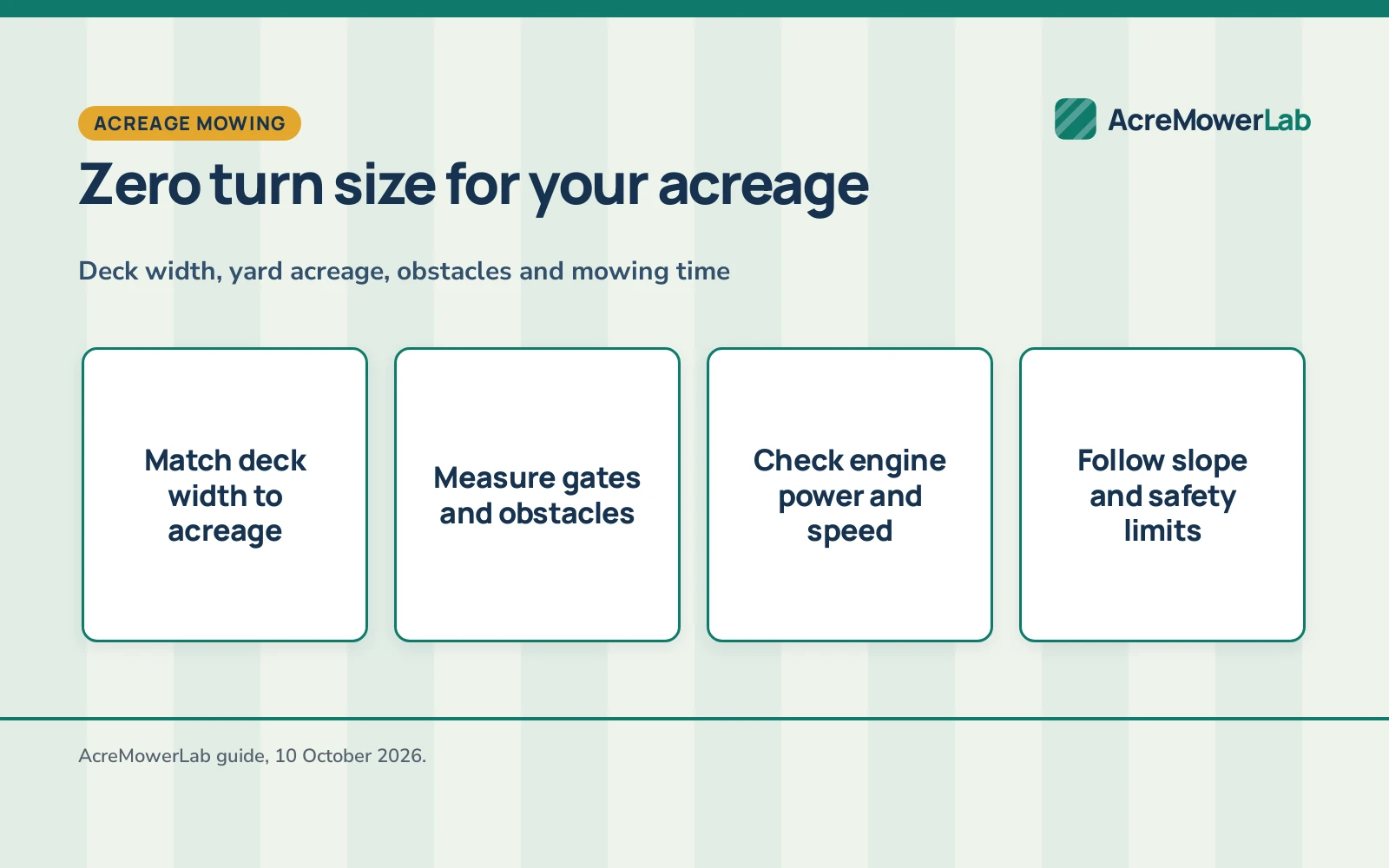
To answer what size zero turn do I need for my acreage, match your deck width to your property size, yard obstacles, and gate clearance: choose a compact 42-inch deck for properties from 1 to 2 acres with tight obstacles or narrow passages, and move up to a 60-inch deck for open ground across 4 to 10 acres. A wider deck cuts more grass per pass and reduces mowing time on large fields, while a compact deck maneuvers around trees, garden beds, and narrow fence openings. This guide breaks down deck width selection step by step.
Other machines to compare
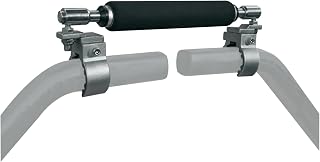 Zero-Turn BarCheck price on Amazon
 EGO Power+ Rear Bumper for Z6 Zero Turn Riding Lawn MowersCheck price on Amazon
AcreMowerLab earns a commission when you shop through links here. It never changes your price. Affiliate disclosure.
What size zero turn do I need for my acreage: pick the right deck width
The right zero-turn deck width balances open cutting capacity with maneuverability around obstacles. Choosing a deck that is too small adds extra mowing hours across multi-acre properties, while choosing a deck that is too wide increases scalping risk on uneven ground and will not fit through narrow gates. The table below matches deck width to property size and yard layout.
| Deck width | Acreage | Best for | Key consideration |
|---|---|---|---|
| 42 inches | 1 to 2 acres | Residential yards, tight trees, landscaped beds | Compact footprint; Ariens lists 42 inches on the Edge |
| 42 inches (expandable) | 2 to 5 acres | Multi-acre lawns with obstacles and trees | Add-on battery capacity; EGO rates the 42-inch Z6 for up to 2 acres on included batteries and expandable for 3, 4, or 5 acres |
| 60 inches | 4 to 10 acres | Expansive open ground, pastures, commercial turf | Wide pass coverage; Greenworks lists a 60-inch deck rated up to 4.4 acres on included batteries |
For compact properties, see our guide on the best riding mower for 1 acre to compare entry-level cutting widths. If your property spans 2 acres with landscaped zones, our best zero-turn mower for 2 acres roundup compares mid-size options.
Step 2: measure gates and narrow spaces
Before buying a zero-turn mower, measure every gate, shed door, and trailer ramp on your property. Overall machine width typically exceeds stated deck cutting width when side-discharge chutes and deflectors are in place. Ariens lists a 42-inch cutting width on the Edge, which offers a more compact footprint around yard structures, but overall machine width with discharge components must still be checked against gate openings. A wider 60-inch model, such as the Greenworks MaximusZ, requires a much broader passage and will not clear narrow garden gates. Measuring gates and shed entries ahead of time prevents the expense of modifying fence posts or doorways.
Step 3: count obstacles and yard contours
Property layout matters as much as total acreage when choosing deck size. An open pasture allows a wide 60-inch deck to make long, uninterrupted passes with minimal slowing. Properties with dense shade trees, landscaped beds, flagpoles, and drainage swales benefit from a narrower deck. A 42-inch deck maneuvers more easily around tight obstacles and reduces the risk of scalping on undulating ground compared to extra-wide decks. Review our guide to zero turn mower sizes to inspect frame dimensions and turning clearance.
Step 4: match engine power to deck size
Deck width influences power requirements because wider decks spin more blades and discharge larger volumes of grass. Adequate engine displacement or motor wattage keeps blade tip speed high in thick spring growth. For a 42-inch deck, Ariens equips the Edge with a 20 hp Briggs & Stratton engine, driving a 2-blade fabricated deck with a rated forward ground speed of 6 mph. On battery equipment, EGO rates the 42-inch Z6 as equivalent to a 22-horsepower gas engine using four 56V 10.0Ah batteries to power four independent brushless motors. Wider commercial-scale decks demand more output: Greenworks rates its 60-inch MaximusZ as equivalent to a 31 hp gas engine, using three hub motors to maintain a blade speed of 17,900 ft/min.
Step 5: check slope ratings and ground stability
Zero-turn mowers generally steer through differential drive on the rear wheels, making traction essential for steering control. Never exceed the maker’s maximum slope rating for your machine. On steep ditch banks or damp slopes, zero-turns can lose traction and slide sideways. Machine weight also affects handling: Ariens lists an operating weight of 498 pounds for the 42-inch Edge, while the battery-powered 60-inch Greenworks MaximusZ weighs 1120 pounds. A heavier machine carries greater momentum downhill if tires break loose on slick turf. For extreme slopes beyond riding mower limits, specialized tracked equipment provides greater stability; for example, Tyzar lists a remote-control crawler mower with a 224 cc engine capable of operating on slopes up to 45 degrees. See our guide on the best riding mower for hills for slope tips.
Deck width and mowing time
A wider deck covers more ground per pass, reducing total mowing hours across large properties. On 1 to 2 acres, the time difference between a 42-inch and 60-inch deck is modest, but across 4 to 10 acres, a wide deck saves significant operating hours each week. Mowing speed also affects completion time: EGO states the 42-inch Z6 operates at 3 to 7 mph, with travel speed up to 8 mph. Ariens lists a forward speed of 6 mph and a reverse speed of 3 mph on the Edge. Pairing a wide 60-inch deck with steady forward speed allows an operator to cover expansive acreage efficiently. See how long does it take to mow an acre for time comparisons.
Fabricated steel versus stamped decks
When selecting a zero-turn deck size for acreage, deck construction is just as critical as cutting width. Stamped decks formed from single steel sheets suit smooth, manicured lawns, but rough acreage demands fabricated steel welded from heavy plate. Ariens equips the 42-inch Edge with a fabricated steel deck for impact durability against hidden obstacles. On wide commercial-sized decks, Greenworks builds the 60-inch MaximusZ with a 10-gauge fabricated steel deck. For overgrown brush clearing, Earthquake lists an 11-gauge steel deck on its 44-inch tow-behind rough-cut mower. Heavy-gauge fabricated decks resist gouging and keep blade spindles properly aligned across rough acreage.
Gas versus battery zero-turn mowers
Property acreage dictates fuel and runtime requirements. Gas zero-turn mowers allow continuous work through fast refueling: Ariens lists a 2 gallon fuel capacity on the 42-inch Edge with its 20 hp engine, suitable for multi-acre residential mowing between fill-ups. Battery models eliminate engine oil changes and belt maintenance, but total coverage depends on battery capacity. EGO rates the 42-inch Z6 to cut up to 2 acres on a single charge with four 56V 10.0Ah batteries, with expansion slots to add more batteries for 3, 4, or 5 acres. Greenworks equips the 60-inch MaximusZ with two 20.0Ah and four 8.0Ah batteries, providing an average runtime of 105 minutes to cut up to 4.4 acres. For properties expanding to 5 to 10 acres, see our commercial zero-turn mower guide.
Traction and ground conditions
Acreage terrain varies from smooth lawn to damp hollows and rough ground. Zero-turn mowers use turf tires engineered to protect grass, but wet or loose soil can cause drive wheels to slip. Compact 42-inch machines exert less overall weight on the lawn, reducing compaction on landscaped home turf. Larger 60-inch models feature wider wheelbases that distribute weight over a broader footprint, but their heavy frames can leave ruts if driven across waterlogged low spots. Towing attachments also demands firm ground: Greenworks lists a 300 lb towing capacity on the 60-inch MaximusZ for pulling utility carts or aerators when soil conditions are dry.
Safety
Operating a zero-turn mower requires careful attention to stability and surroundings on large acreage. Wear eye and hearing protection, and wear sturdy footwear before starting work. Clear sticks, stones, wire, and other debris from the lawn before mowing, and keep children and pets out of the yard. Carry no passengers on the mower at any time.
Slope management is critical because zero-turn mowers steer through their rear drive wheels. Zero-turns lose traction on slopes and near ponds or ditches, which can cause sudden slide or rollover. Never exceed the maker’s maximum slope rating for your machine. Where a rollover protective structure and seat belt are equipped, keep the structure upright and fasten the belt. Turn blades off when reversing. For gas machines, refuel only with the engine off and cool to avoid fire hazards. Stop the blades and set the parking brake before leaving the operator seat.
FAQ: mowing large lots
Can a 42-inch zero turn mow 2 acres?
Yes. A 42-inch zero turn handles properties from 1 to 2 acres efficiently. EGO rates the 42-inch Z6 to cut up to 2 acres on a single charge with four 10.0Ah batteries, and Ariens equips the 42-inch Edge with a 20 hp engine and a 6 mph forward speed. A 42-inch deck is practical when your 2 acres include trees, tight landscaping, and narrow pathways.
What size zero turn do I need for 4 to 5 acres?
For properties spanning 4 to 5 acres, a 60-inch deck is generally the most efficient choice because its wide cutting width reduces mowing hours. On electric platforms, Greenworks rates the 60-inch MaximusZ to cut up to 4.4 acres with its included battery packs, equivalent to a 31 hp gas engine.
Will a 60-inch zero turn fit through a standard gate?
Generally no. A 60-inch zero turn requires a wide gate or equipment opening. Because side-discharge chutes and deck hardware extend past the blades, total machine width exceeds 60 inches. If your acreage has narrow fence gates, you must either widen the gate opening or choose a more compact deck size.
Is a fabricated deck better than a stamped deck for acreage?
Yes. Fabricated decks are welded from heavy steel plates, such as the 10-gauge steel on the Greenworks 60-inch deck. They resist warping, impact damage from rocks or tree stumps, and maintain spindle alignment on rough acreage far better than lighter stamped steel decks.
Can zero turn mowers handle steep slopes on acreage?
Standard zero-turn mowers face traction limits on hills because steering depends on rear drive wheels. Zero-turns can lose traction and slide on slopes or near ponds and ditches. Never exceed the maker’s maximum slope rating. For steep inclines, specialized equipment like the Tyzar crawler mower uses rubber tracks and a 224 cc engine to traverse slopes up to 45 degrees.
More mowing guides
- Best Riding Mower for 1 Acre: 4 Picks by Deck Size
- Best Zero-Turn Mower for 2 Acres: 3 Picks by Deck Size
- Best Commercial Zero-Turn Mower: 4 Picks for 5 to 10 Acres
- How Long Does It Take to Mow an Acre? Times by Mower Type
Explore our zero-turn mower guides to narrow down choices by acreage, terrain, deck width, and power type.