Lawn Tractor Maintenance: Step-by-Step Care Guide
A practical guide to lawn tractor maintenance on acreage: seasonal intervals, deck cleaning, blade care, oil service, and storage prep.

On this page
Top picks at a glance
As an Amazon Associate I earn from qualifying purchases.
- 1
 EGO Power+ Electric Riding Lawn Mower9.5/10View on Amazon
- 2
 Husqvarna TS 140X9.5/10View on Amazon
- 3
 Husqvarna TS 154X9.5/10View on Amazon
- 4
 Runleader RL-HM011E Digital Hour Meter & TachometerView on Amazon
- 5
 YOOREAL Digital OEM Maintenance Hour Meter GaugeView on Amazon
- 6
 YOOREAL HM016 Vibration Hour MeterView on Amazon
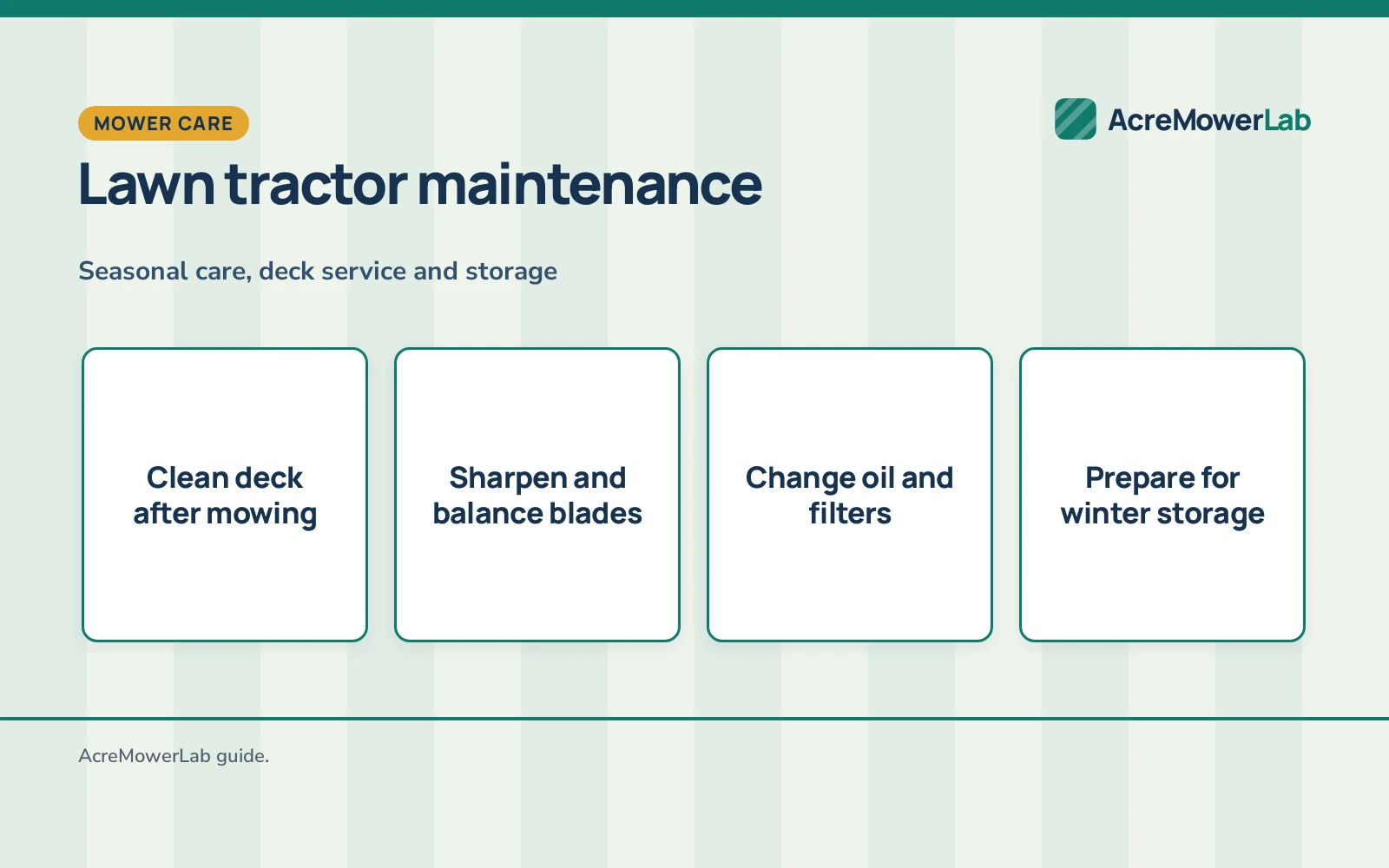
On acreage with open grass, gentle slopes, and fence lines to trim around, lawn tractor maintenance keeps your cutting deck level, your engine running cool, and your drive system pulling strong. Performing regular maintenance means cleaning the deck after mowing, inspecting belts and pulleys, sharpening blades, changing engine oil and filters seasonally, and storing the machine properly over winter. Staying ahead of wear prevents costly breakdowns and preserves a clean cut across your property.
Other machines to compare
 Runleader RL-HM011E Digital Hour Meter & TachometerCheck price on Amazon
 YOOREAL Digital OEM Maintenance Hour Meter GaugeCheck price on Amazon
 YOOREAL HM016 Vibration Hour MeterCheck price on Amazon
AcreMowerLab earns a commission when you shop through links here. It never changes your price. Affiliate disclosure.
Lawn tractor maintenance: seasonal service schedule
| Service area | Interval | Key focus |
|---|---|---|
| Mower deck | After each mowing pass | Scrape grass buildup, wash deck shell, inspect belts |
| Cutting blades | Seasonal or when nicked | Check sharpness, balance blades, inspect spindle bolts |
| Engine service | Seasonal startup and fall | Replace oil, oil filter, air filter, and spark plug |
| Hydrostatic drive | Monthly inspection | Clear debris from cooling fins, check purge function |
| Battery and chassis | Monthly and winter prep | Clean terminals, check tire pressure, lubricate grease zerks |
A structured schedule keeps your machine dependable through heavy grass growth on acreage. For common replacement components, see our guide to lawn tractor parts and explore our overview of riding mowers.
Step 2: inspect and clean the mower deck
Grass clippings pack tightly under the deck shell during mowing. Wet clippings hold moisture against the metal, causing rust and deck decay. Accumulated clippings also disrupt airflow, causing ragged cuts and clumping across the lawn.
Park on level ground, turn off the engine, set the parking brake, remove the key, and disconnect the spark plug wire. Use a plastic or wooden scraper to remove caked grass from the deck underside. When washing, allow pulleys to cool down before applying water. Clean grass accumulation off the top of the deck shell around mandrel pulleys to prevent debris from catching in belts. Learn more in our guide on how to clean a mower deck.
Husqvarna lists a 46-inch stamped deck with 2 blades on the TS 120, and a 54-inch stamped deck with 3 blades on the TS 140X. A 46-inch deck with 2 blades offers a compact layout with fewer spindle housings to clear, while a 54-inch deck with 3 blades has additional mandrel pockets where wet clippings can pack and bind rotating parts.
Step 3: service blades and check spindle balance
Sharp mower blades cut grass cleanly, allowing turf to recover without browning at the tips. Dull blades tear the grass, creating ragged edges that dry out and stress your lawn. Dull cutting edges also create drag on the engine, increasing fuel consumption and belt wear across mowing sessions.
Inspect cutting edges after mowing sessions on rough acreage. Look for nicks from stones, rounded cutting tips, and bent sails. If a blade shows severe gouges, thinned metal along the trailing edge, or cracks near the center mounting hole, replace it immediately. Never attempt to straighten a bent blade.
When sharpening, follow the original factory bevel angle along the cutting edge. Remove equal amounts of metal from each side to keep the blade balanced. Check balance on a cone balancer before reinstalling, as an unbalanced blade generates severe vibration that destroys spindle bearings. Husqvarna lists 2 blades on the TS 120 and 3 blades on the TS 140X. Always service blades in matched sets to preserve an even cut. For guidance, review how often should you sharpen mower blades and see our recommended mower blade sharpener picks.
Step 4: change engine oil and replace filters
The engine works hard during hot summer mowing, powering the ground drive and cutting blades through thick grass. Engine oil lubricates moving parts, carries away heat, and suspends combustion contaminants. Over time, heat and friction break down oil viscosity, while soot turns it acidic.
Husqvarna lists a 22HP Briggs engine on the TS 120, and a 24HP Briggs engine on the TS 140X. Maintaining these overhead-valve engines requires regular oil service at seasonal startup or midway through heavy summer cutting. Run the engine briefly to warm the oil so contaminants drain out completely. Shut down the engine and extract the used oil. Using an oil extractor pump draws oil through the dipstick tube cleanly without spills over tractor frame rails.
Replace the spin-on oil filter during every oil change. Apply fresh oil to the rubber gasket of the new filter, thread it on until the gasket meets the base, and tighten by hand. Check the paper air filter cartridge and foam pre-cleaner. Clean loose dust from the pre-cleaner, and replace paper cartridges that show heavy dirt accumulation to prevent abrasive grit from entering the carburetor.
Step 5: maintain battery, tires, and drive system
A dependable electrical system and proper chassis setup ensure your tractor handles acreage mowing without unexpected stops.
- Battery terminals: inspect battery posts for corrosion. Clean terminal connections with a wire brush, tighten terminal bolts firmly, and apply protective grease to block moisture.
- Tire pressure: check inflation pressure in front and rear tires regularly. Uneven tire pressure causes the mower deck to hang tilted, leaving stepped stripes and causing scalping on uneven terrain.
- Drive belts: inspect the ground drive belt and deck drive belt for cracking, fraying, or glazed sidewalls. Ensure idler pulley tension springs maintain firm pressure so belts do not slip under load.
- Fuel storage: Husqvarna lists a 2.5 gallon fuel capacity on the TS 120, and a 3 gallon fuel capacity on the TS 140X. Adding fuel stabilizer to fresh fuel preserves volatile compounds and prevents stale fuel from leaving sticky varnish inside fuel lines and carburetor jets.
Check belts and grease chassis fittings
Lawn tractors rely on V-belts to transfer power from the engine crankshaft pulley to the transmission and cutting spindles. Belts stretch and wear as they flex around idler pulleys and absorb shock loads from tall grass. Inspect belt routing to ensure belts sit squarely inside pulley grooves without rubbing against belt guides or brackets.
Chassis grease points require regular lubrication to purge dirt and water from high-friction pivot points. Locate grease zerks on the front axle center pivot, front wheel spindles, steering sector gear, and mower deck mandrels. Wipe each grease fitting clean before attaching a grease gun coupler. Pump fresh grease into the fitting until clean grease appears around the bushing edges, wiping away excess grease.
Inspect steering tie rods and drag links for loose locknuts or worn ball joints. Keeping steering linkages adjusted eliminates wandering and ensures straight mowing passes along fences and gardens.
Care for the hydrostatic transmission
Hydrostatic transmissions deliver seamless speed control without manual clutching or shifting. Husqvarna lists Tuff Torq hydrostatic transmissions with ground speeds of 5 mph forward and 2 mph reverse on the TS 120 and TS 140X. These hydraulic drive systems rely on internal fluid pressure to turn rear axles, generating heat during prolonged acreage mowing.
A critical maintenance step for a hydrostatic transaxle is keeping cooling fins and the cooling fan completely clean. Grass clippings, chaff, and pulverized leaves settle onto the transaxle housing, insulating the metal casing and blocking airflow from the cooling fan. Clear packed debris using a brush or compressed air after mowing passes.
If your tractor feels sluggish, makes whining noises under load, or exhibits uneven drive response, the hydraulic circuit may contain trapped air. Purging the system by disengaging the freewheel rod and cycling forward and reverse pedals restores hydraulic pressure. For troubleshooting steps, read our guide on how to fix hydrostatic drive on riding mower.
Prepare your tractor for seasonal storage
Winter dormancy and extended wet weather cause significant deterioration if a lawn tractor is stored without proper preparation. Fuel left sitting in the fuel tank and carburetor bowl degrades, absorbing atmospheric moisture and forming gummy deposits that clog internal carburetor passages.
Before putting your tractor away for winter, treat remaining fuel with fuel stabilizer and run the engine long enough for treated fuel to circulate through the carburetor. Alternatively, shut off the fuel valve and run the engine until it stalls from lack of fuel, emptying the carburetor bowl completely. For detailed seasonal prep, consult our complete guide on how to store a riding mower for winter.
Remove the tractor battery and store it on a wooden shelf in a cool, dry area away from freezing temperatures. Connect the battery to a smart charger to keep it charged without overcharging. See our review of the best battery maintainer for riding mowers to select a dependable unit. Scrape and wash the mower deck shell, dry it thoroughly, and spray clean metal surfaces with a light protective oil film to prevent corrosion.
Mowing conditions and terrain care
Acreage properties present varied terrain, from gentle lawn slopes to rough ditch banks and pastures. Matching your maintenance habits to ground conditions protects your equipment from premature fatigue.
Inspect terrain before mowing to clear hidden obstacles, including fallen branches, rocks, wire, and debris. Striking a solid object at full blade speed can bend cutting spindles, damage blade adapters, or crack the deck housing. On undulating ground, adjust anti-scalp deck wheels so they ride just above the soil surface, preventing the deck rim from digging into high spots.
Avoid mowing wet grass whenever possible. Wet clippings stick stubbornly to the deck underside, form dense clumps that smother turf, and cause drive tires to spin and tear sod on slopes. Wait for morning dew to burn off and allow soil to firm before starting mowing passes.
Safety
Safety is essential when servicing or operating lawn equipment. Always shut off the engine, set the parking brake, and disconnect the spark plug wire before reaching near blades, belts, or pulleys. Wear eye and hearing protection, heavy gloves, and sturdy shoes during maintenance and operation. Never exceed the maker’s max slope rating on any hill, and remember that zero-turns lose traction on slopes and near ponds or ditches. Fasten your seat belt and keep the rollover protective structure upright where equipped. Never carry passengers, and keep children and pets out of the yard whenever machinery is active. Turn blades off when reversing. Refuel only outdoors with the engine off and cool, and clear sticks, rocks, and wire from the mowing area before starting work.
FAQ: mowing large lots
How often should a lawn tractor deck be cleaned?
Clean the deck underside after each mowing pass when cutting damp or lush grass, and inspect it at least monthly in dry conditions. Packed grass clippings trap moisture against the steel shell, promoting rust and reducing discharge velocity.
When should lawn tractor mower blades be sharpened?
Inspect blades at the start of each mowing season and sharpen them whenever you observe frayed, brown tips on grass blades. If blades strike rocks, roots, or hard debris, remove them immediately to inspect for nicks, balance issues, or bends.
How do you prepare a lawn tractor for winter storage?
Clean the cutting deck thoroughly, lubricate chassis grease points, change the engine oil, and add fuel stabilizer to fresh fuel before running the engine dry. Disconnect the battery and connect it to a maintainer in a dry space protected from freezing.
Why is tractor deck leveling important for mowing?
An unlevel deck produces uneven turf height, visible ridges across mowing passes, and premature scalp marks on rolling ground. Checking tire inflation pressure and adjusting deck hanger links restores an even, level cut across your acreage.
How do you maintain a lawn tractor hydrostatic transmission?
Keep the transmission exterior, cooling fan blades, and cooling fins clean and free of packed grass and dirt. Clean fins allow proper airflow to prevent hydraulic fluid overheating during long mowing passes on acreage.
More mowing guides
- How to Clean a Mower Deck
- How Often Should You Sharpen Mower Blades?
- How to Store a Riding Mower for Winter
- Best Battery Maintainer for Riding Mowers (2026): 5 Picks Compared
Use the Mower Matcher to narrow down choices by acreage, terrain, budget, and power type.