Are Robotic Mowers Safe Around Kids and Pets?
Robotic mowers use collision sensors, lift shutoffs, and enclosed blades to lower injury risks, but keeping children and pets indoors during active mowing remains essential.

On this page
Top picks at a glance
As an Amazon Associate I earn from qualifying purchases.
- 1
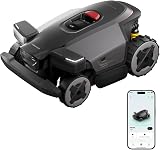 roborock RockMow X130H Robot Lawn Mower9.6/10View on Amazon
- 2
 DREAME Robot Lawn Mower Decal for A3 AWD Series9.5/10View on Amazon
- 3
 WORX Robot Lawn Mower for 1/2 Acre9.7/10View on Amazon
Are robotic mowers safe around kids and pets? The short answer is that robotic mowers are generally safer than traditional riding or walk-behind mowers, but they are not completely harmless and require active supervision and clear yard boundaries. Modern units incorporate automated safeguards, including lift sensors, collision bumpers, obstacle detection sensors, and small pivoting blades rather than heavy solid steel blades. While these features lower the risk of severe injury, contact with spinning blades or drive wheels remains possible if a child or pet interacts with an active machine. The safest approach combines built-in obstacle detection with smart scheduling to ensure the mower runs only when family members and animals are indoors.
AcreMowerLab earns a commission when you shop through links here. It never changes your price. Affiliate disclosure.
Are robotic mowers safe around kids and pets: built-in safety systems
| Safety feature | Primary function | Limitation |
|---|---|---|
| Lift and tilt sensors | Shuts off blade rotation when the chassis leaves the ground | Requires the mower to tilt or lift before triggering |
| Obstacle detection | Identifies objects and navigates around them without impact | Low-profile items under sensor sightlines may be missed |
| Mechanical bump sensors | Stops forward drive and reverses upon physical contact | Requires physical impact before changing direction |
| Pivoting razor blades | Blades fold back when striking resistance to reduce impact force | Blades remain sharp enough to cause lacerations |
Modern robotic mowers rely on overlapping safety layers rather than a single fail-safe mechanism. The primary defense involves spatial perception through sensors. For example, the ECOVACS Goat O1000 LiDAR PRO listing specifies a 360-degree dual-LiDAR system and AI vision designed to identify more than 200 types of obstacles, maintaining detection precision down to 5 cm and passing narrow lawn corridors as slim as 0.8 m. Similarly, the LOPKIN L2500-NEO listing specifies an AI vision system designed to avoid more than 300 common objects, explicitly identifying pets, children, and toys without relying solely on collision bumpers.
When obstacle avoidance systems do not divert the mower in time, mechanical bump sensors serve as the secondary physical defense. When the bumper contacts an obstacle, the mower stops forward motion, reverses, and pivots to continue mowing in a different direction, while the cutting disc continues spinning beneath the chassis. If a child or animal lifts the housing, internal tilt sensors cut motor power to the blade disc. The roborock RockMow X115H listing highlights a multi-sensor fusion system utilizing 4 sensors alongside a PIN code lockout and a high-decibel alarm to prevent unauthorized handling.
Step 2: understand blade design and contact risks
A major safety advantage of robotic mowers over conventional gas mowers is the cutting assembly. A standard gas walk-behind mower spins a heavy steel blade with high rotational momentum, capable of fracturing bones or launching stones. In contrast, most residential robotic mowers utilize a spinning disc equipped with small, free-swinging razor blades.
For instance, the ANTHBOT M5 LIDAR listing specifies five sharp blades mounted to a 200mm deck (7.9 inches cutting width), while the YARDCARE M800Plus listing specifies a cutting disc with three small rotating blades across a 7-inch cutting width. If a pivoting blade strikes a solid object, the blade swings backward on its retaining screw instead of transferring rigid kinetic energy. This design significantly reduces thrown-object hazards and blunt-force impact severity.
However, free-swinging blades remain razor-sharp. If a child slips a finger underneath the deck skirt, or if an animal lies in tall grass where its tail or paws extend under the cutting path, lacerations can occur. The ECOVACS Goat O1000 LiDAR PRO listing features a cutting width of 8.66 inches with cutting heights between 1.2 inches and 3.6 inches, while the LOPKIN L2500-NEO offers cutting heights from 1.18 to 2.76 inches. Lower cutting heights bring spinning blades closer to ground level, increasing direct laceration risks for resting paws or feet, while higher cutting heights still leave enough room beneath the housing for small limbs to reach the cutting disc.
Step 3: schedule mowing when the lawn is unoccupied
The most dependable way to eliminate safety risks around children and pets is scheduling mowing sessions when the yard is empty. Unlike loud gas equipment that demands daytime operation, electric robotic mowers operate with minimal sound. The ANTHBOT M5 LIDAR listing states an operating noise level of 58 dB or lower, while the LOPKIN L2500-NEO listing states 60 dB. Because these machines run at conversational sound levels, you can run them during hours when kids are at school or pets are resting inside.
Coordinating mowing schedules with family routines ensures that the yard serves as an active play area only when the mower sits idle in its dock. Most companion mobile applications allow you to program distinct operating windows. Setting the mower to run during school hours or mid-day periods when the grass is dry and family members and pets remain indoors prevents accidental interactions.
Step 4: create digital no-go zones around play equipment
Modern wire-free robotic mowers make isolating children’s play areas straightforward through app-based virtual boundaries. Instead of laying physical perimeter wire, wire-free systems use satellite RTK, optical LiDAR, or vision systems to map yard boundaries and establish custom no-go zones. For larger residential yards, choosing the best robotic mower for large lawns provides expansive mapping tools to block out swing sets, trampolines, sandboxes, and playhouses.
Homeowners comparing navigational precision can review our guide on RTK vs LiDAR robotic mower navigation to see how clear line-of-sight and tree cover affect positioning. When configuring your lawn map, draw generous buffer zones around fixed play structures so that children rushing into the yard never encounter the mower navigating around equipment legs.
Step 5: maintain strict supervision and yard habits
Automated equipment should never replace parental supervision. Children should be taught that the robotic mower is an active power tool rather than a toy. Never permit children to ride on the mower, sit on top of the chassis, sit in its path, or poke objects into the chassis skirt.
Companion apps also provide digital access controls. The roborock RockMow X115H incorporates a PIN code lockout, preventing children from manually pressing the start button on the mower body to engage cutting blades. Keep security codes confidential and disable manual start capabilities if your mower supports digital lockout features.
Clear toys and obstacles before every cycle
While advanced robotic mowers recognize common obstacles, clutter on the lawn creates hazards for both the mower and your belongings. The dreame A3 AWD listing specifies AI vision that dodges over 300 obstacles including pets and children’s toys, and the YARDCARE M800Plus listing identifies over 150 common obstacles. However, low-profile objects, dog ropes, garden hoses, and small toys left in tall grass can still cause problems.
If a mower rolls over a dog rope or flexible hose, the material can wrap tightly around the blade disc or drive wheels, stalling the motor and dulling blades. Establishing a family habit of clearing toys, balls, and pet gear off the grass before scheduled mowing runs protects play items and keeps the mower operating smoothly.
Account for pet behavior and outdoor animals
Pets react to robotic mowers in unpredictable ways. Some dogs ignore the machine, while others become territorial, barking, chasing, or attempting to bite the rotating wheels and bumper. If your dog exhibits aggressive or protective behavior toward the mower, do not leave them together in the yard unattended. Persistent biting can damage mower sensors or cause mouth injuries.
Wildlife protection requires equal attention. Nocturnal animals, such as hedgehogs, ground-nesting birds, and small mammals, frequently forage across residential turf after dark. Young animals may freeze in place rather than flee when approached by a quiet mower. Because smaller wildlife can sit below the optical sightlines of front cameras, avoid scheduling mowing cycles during nighttime hours.
Mind wet grass and slope limits
Traction limitations affect mower handling and stopping distances on sloped or damp ground. On steep inclines, wet turf can cause drive wheels to slip or slide past boundary lines, creating pinch hazards near fences, retaining walls, or garden ponds.
Always review manufacturer slope ratings before allowing a machine to operate on hilly yards. The dreame A3 AWD listing specifies all-wheel-drive hub motors capable of climbing slopes up to 80% (38.7 degrees) and traversing 2.17-inch obstacles. The roborock RockMow X115H similarly lists an 80% slope rating (38.7 degrees) and 3.15-inch obstacle handling, while the LOPKIN L2500-NEO lists handling for slopes up to 57% (30 degrees). For moderate terrain, the ANTHBOT M5 LIDAR lists capability for 24-degree slopes (45% slope), and the YARDCARE M800Plus handles slopes up to 35% (20 degrees). If your yard contains steep drops or ponds, establish generous no-go margins well back from the edge. Browse our broader walk-behind and robotic mowers coverage for equipment comparisons suited to different lawn layouts.
Safety
Operating any lawn mower involves mechanical risks. Always follow these essential safety guidelines:
- Keep children and pets indoors whenever the robotic mower is actively running on the lawn.
- Never allow children to sit on, play with, or chase the mower while it is powered on.
- Enable PIN code locks and access passwords to prevent unauthorized manual starting.
- Inspect the lawn and remove toys, hoses, tools, and dog chew bones before each scheduled mowing run.
- Disconnect the power key or switch off the main battery switch before lifting, cleaning the deck, or replacing blades.
- Wear sturdy gloves when handling blade discs or replacing cutting razors.
- Maintain proper setback distances from open water, retaining walls, and steep slopes.
- Store your battery equipment indoors during freezing winter months: read our guide on how to store a robotic mower in winter.
FAQ: mowing large lots
Can a robotic mower hurt a dog or cat?
Yes, contact with an active robotic mower can cause injuries to pets. Although collision sensors and obstacle avoidance cameras help the mower steer clear of upright animals, resting pets can place paws or tails under the deck skirt. The most reliable safeguard is keeping pets indoors while the mower operates.
Are robotic mowers safer than traditional push mowers?
Robotic mowers reduce several major hazards associated with traditional walk-behind and riding mowers. They use small pivoting blades that fold away on impact rather than massive solid steel bars, and they eliminate thrown-rock hazards and foot slips under an active deck. However, because they operate autonomously, they require clear scheduling so children do not treat them as toys.
What happens if a child touches a robotic mower while it is running?
If a child bumps the housing, mechanical collision sensors stop the forward drive and reverse the mower. If a child attempts to lift or tilt the machine, internal tilt sensors cut power to the blade motor. However, children should be taught never to touch an operating mower, as small hands can reach under the deck before sensors engage.
Do robotic mowers detect pet waste and small toys?
Advanced vision systems detect many common obstacles, but small items can be missed. Vision algorithms recognize defined objects such as balls, shoes, and patio chairs, but low-lying pet waste, thin cords, or small toys flattened in the grass often slip beneath sensor thresholds. Clearing the lawn before mowing prevents messy cleanup and blade fouling.
Is it safe to run a robotic mower at night?
Running a robotic mower at night is quiet, but it introduces hazards for wildlife and outdoor pets. Nocturnal animals frequently forage after dark and may freeze rather than move away from machinery. In addition, optical cameras require adequate illumination to identify obstacles. Running scheduled cycles during daylight hours while family members and pets remain indoors is much safer.
More mowing guides
- Best Robotic Mower for Large Lawns: 4 Wire-Free Picks
- Do Robotic Mowers Work on Large Lawns?
- RTK vs LiDAR Robotic Mower Navigation
- How to Store a Robotic Mower in Winter
Read our analysis on whether robotic mowers work on large lawns, or discover wide-coverage choices in our guide to the best robotic mower for large lawns.