Lawn Mower Repair Guide: Common Home Fixes
Common home fixes for a mower that will not start, stalls, surges or cuts poorly, checked in a safe order from fuel to blade.

On this page
Top picks at a glance
As an Amazon Associate I earn from qualifying purchases.
- 1
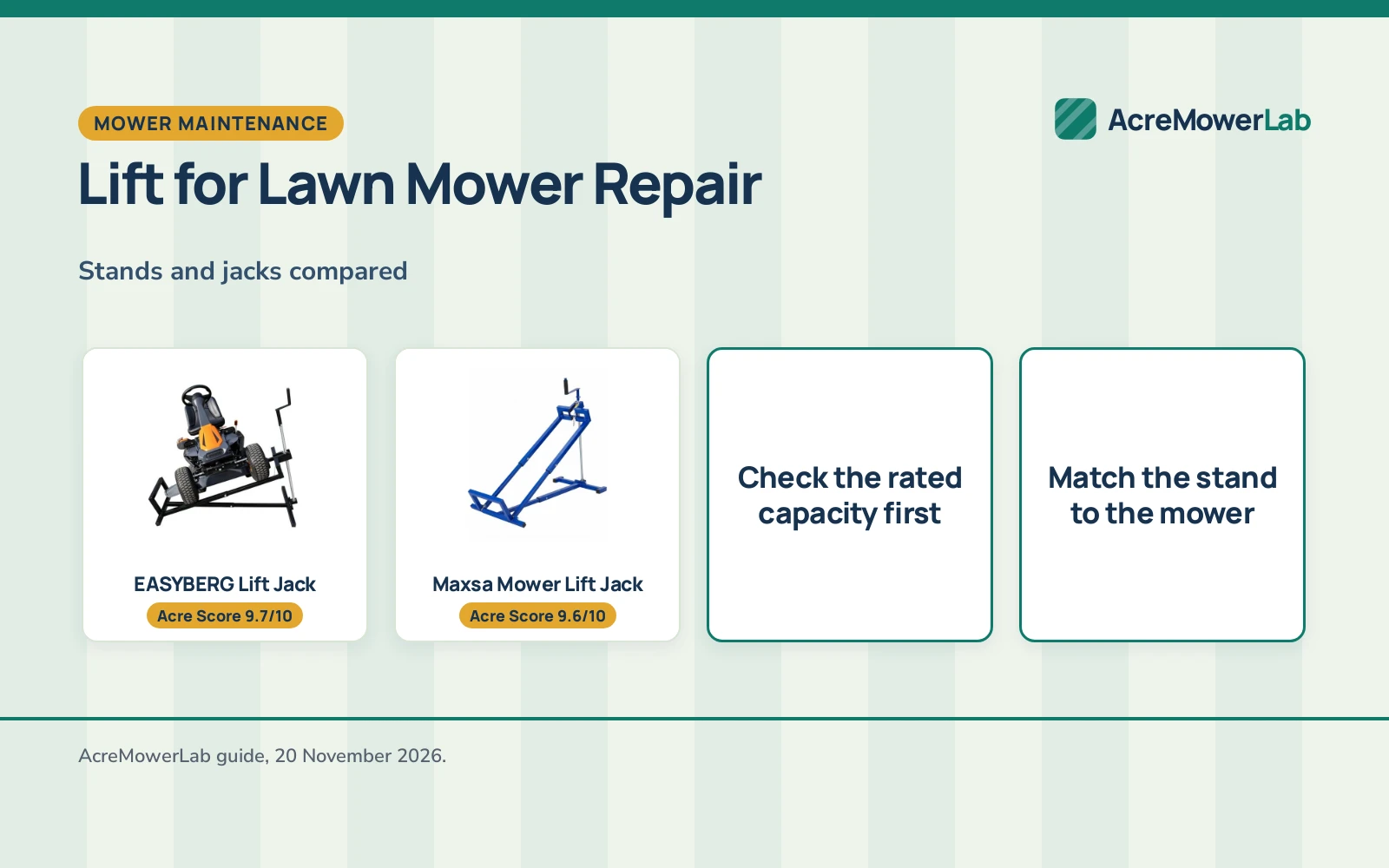
 EASYBERG Lawn Mower Lift Jack9.7/10View on Amazon
- 2
 Maxsa Lawn Mower Lift Jack9.6/10View on Amazon
- 3
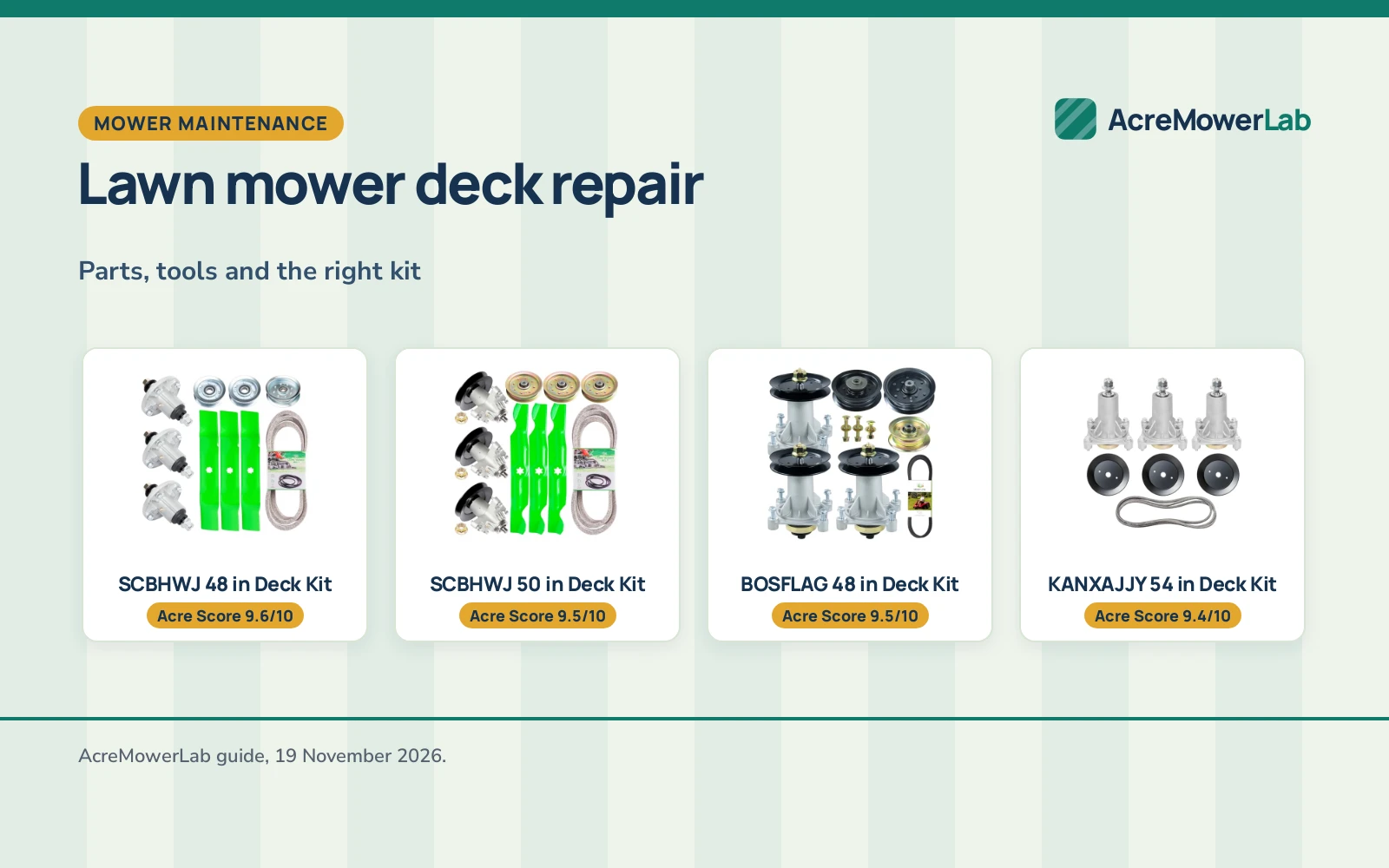
 SCBHWJ 48-Inch Deck Rebuild Kit for John Deere 48-Inch9.6/10View on Amazon
On acreage, a mower that will not start or will not cut clean costs more than time, because the grass keeps growing while the machine sits. This lawn mower repair guide covers the common home fixes by system: fuel, spark, air, blade and deck, drive and battery. Work from the simple causes outward, follow your manual for anything inside the engine, and call a shop when a fix needs tools or parts you do not have on hand.
AcreMowerLab earns a commission when you shop through links here. It never changes your price. Affiliate disclosure.
Lawn mower repair guide: start with the symptom
Name the symptom before you touch a part. A mower with electric start that will not crank points to battery, cables and safety switches. One that cranks but will not start points to fuel, spark or air. One that starts and then stalls points to stale fuel or a blocked fuel path. One that runs well but cuts poorly points to the blade, deck or belt. Matching the symptom to a system keeps you from replacing the wrong part.
| Symptom | Check first | Common home fix |
|---|---|---|
| Will not crank | Battery and cables on electric-start models; seat and blade switches on riders | Charge or replace the battery, clean cable ends |
| Cranks, will not start | Fuel in the tank, spark plug, air filter | Fresh fuel, clean or replace the plug and filter |
| Starts, then stalls | Fuel age, fuel line and filter, tank vent | Drain stale fuel, replace a cracked line or clogged filter |
| Runs rough or surges | Carburetor, governor and throttle springs | Clean the carburetor, replace a stretched or broken spring |
| Cuts poorly | Blade edge, deck buildup, belt | Sharpen or replace the blade, clean the deck, check the belt |
For routine care that prevents many of these faults, see our lawn mower maintenance schedule. This guide is the repair side of lawn mower maintenance and repair: what to do after a fault shows up.
Step 1: check fuel before anything else
Old fuel is a common cause of a mower that ran last season and will not start now. Fuel left over winter breaks down and leaves gum in the carburetor. Drain the old fuel into an approved container, refill with fresh fuel, and try again before you buy parts. If the engine starts and then dies, check the fuel path: a cracked fuel line, clogged filter or blocked tank vent can starve the engine after a short run. Fuel line kits list sizes plainly, for example the HPENP kit (on Amazon) for 2-cycle small engines states line sizes of 2mm x 3.5mm, 3mm x 6mm, 3mm x 5mm and 2.5mm x 5mm, so match the size your manual calls for. Our guide to types of fuel lines for small engines explains the materials. Refuel only with the engine off and cool.
Step 2: check spark and air
With fresh fuel in the tank, pull the spark plug and look at it. A fouled, cracked or worn plug can keep an engine from starting even when fuel and air are right. Clean or replace it with the type your manual specifies, and set the gap to the manual figure rather than guessing. Our types of spark plugs for lawn mowers page and our spark plug problems page show how plug condition points to the cause. Then check the air filter. A filter packed with dust and grass chokes the engine, and on dusty acreage it loads up fast. Clean a foam filter as the manual directs or replace a paper filter that no longer passes light. Never run the engine with the filter removed, because dust drawn in does lasting damage.
Step 3: clean the carburetor and check the springs
If fuel, spark and air check out and the engine still will not run clean, the carburetor is next. Gum from stale fuel narrows the small passages that meter fuel, so the engine may start on choke and die when the choke opens. Cleaning the carburetor, or fitting a rebuild kit made for your engine, is a common home fix when you work clean and keep parts in order. Photograph linkages before removal so springs and rods go back where they belong. Surging at steady throttle can trace to the governor or throttle springs as well as to the carburetor. Assortment kits cover many small engines, for example the Kaberalty kit (on Amazon) lists 36 pieces of throttle return, linkage and speed control springs for Honda and Briggs & Stratton small engines. Replace a stretched, rusted or broken spring, and do not bend a spring to change engine speed.
Step 4: fix the cut, not just the engine
A mower can run well and still leave a poor cut. A dull blade tears grass instead of cutting it, which shows as ragged, browned tips. Sharpen the blade or fit a new one, and balance it before it goes back on. See our mower blade sharpener picks for the tools. Grass packed under the deck blocks airflow, so scrape the deck clean with the engine off and the spark plug lead removed. Then check the deck belt for cracks, glazing or slack, and confirm the deck sits level as the manual directs. On rough ground, blade strikes are common, so inspect the blade after any hard hit and replace a bent blade rather than straightening it.
Step 5: check drive, battery and safety switches
On a riding mower or zero-turn that will not crank, start with the battery and cables. Clean corroded terminals, charge the battery, and confirm the cables are tight. Then check the safety switches: seat, brake or clutch, and blade. A switch that does not make contact, or a blade lever left engaged, will keep the starter from turning, and that is the switch doing its job. Do not bypass a safety switch to get the mower running. If the engine runs but the mower will not move, check the drive belt and, on hydrostatic models, the bypass lever position in the manual. Our riding mower maintenance guide and push mower maintenance checklist cover routine checks for each type.
Know when to stop and call a shop
Home repair has a clear edge. Internal engine work, flywheel and ignition timing work, and any repair that needs a part you cannot identify belong in a shop. A good manual helps you judge that edge: the Haynes small engine book is stated to carry over 700 photos and diagrams from a complete teardown and rebuild, which shows how much is involved before you open an engine. Keep a record of what you checked and changed, with the date and part numbers from your manual. For more care guides, browse our mower maintenance section.
Safety
Work only with the engine off, the key out and the spark plug lead removed so the engine cannot start while your hands are near the blade or belt. Wear eye and hearing protection and sturdy shoes, clear debris from the work area, and keep children, pets and bystanders away. Refuel only with the engine off and cool, and store fuel in approved containers away from heat. On slopes, never exceed the maximum slope rating in your manual, and carry no passengers. See our Safety Disclaimer.
FAQ: mowing large lots
Why will my lawn mower not start after winter?
Stale fuel is a common cause. Drain the old fuel, refill with fresh fuel, and check the spark plug and air filter before replacing parts.
Why does my mower start and then stall?
The engine is likely starved for fuel or air after a short run. Check the fuel line, fuel filter and tank vent, then the air filter and carburetor.
Can I repair a mower carburetor at home?
Cleaning a carburetor or fitting a rebuild kit made for your engine is a common home fix if you work clean and record linkage positions. Internal engine work belongs in a shop.
Why does my mower cut unevenly?
Check the blade edge first, then deck buildup, belt condition and deck level. A dull or bent blade and a packed deck are common causes of poor cuts.
When should I take a mower to a shop instead?
Take it in for internal engine work, ignition timing, repeated surging after fuel and carburetor checks, or any fault you cannot identify from the manual.
More mowing guides
- Lawn Mower Maintenance Schedule and Supplies
- Riding Mower Maintenance: Step-by-Step Care Guide
- Push Mower Maintenance Checklist
- Types of Spark Plugs for Lawn Mowers
Use the Mower Matcher to narrow down choices by acreage, terrain, budget, and power type.