Types of Tractor Attachments Explained
Types of tractor attachments explained by job and hitch: sweepers, rakes, aerators, box scrapers, grading blades and PTO implements for acreage.

On this page
Top picks at a glance
As an Amazon Associate I earn from qualifying purchases.
- 1
 CINCHLYNX 2Pcs Tractor Bucket AttachmentView on Amazon
- 2
 Titan Attachments 3 Point PTO Finish MowerView on Amazon
- 3
 YINTATECH 46" Quick Attach Pallet Fork Attachment Skid SteerView on Amazon
- 4
 Titan Attachments 3 Point Single Tine Subsoiler with PipeView on Amazon
- 5
 Titan Attachments 3 Point Pine Straw Needle RakeView on Amazon
- 6
 Titan Attachments Compact Manure SpreaderView on Amazon
On a property with open lawn, a gravel drive and beds along the fence line, the tractor is only part of the tool: the attachment decides whether you are collecting leaves, loosening soil or leveling a drive. The types of tractor attachments fall into groups by job and by how they hitch up, from tow-behind cleanup tools to rear-mounted blades and PTO-driven implements, and this guide explains each group step by step.
Other machines to compare
 CINCHLYNX 2Pcs Tractor Bucket AttachmentCheck price on Amazon
 Titan Attachments 3 Point PTO Finish MowerCheck price on Amazon
 YINTATECH 46" Quick Attach Pallet Fork Attachment Skid SteerCheck price on Amazon
 Titan Attachments 3 Point Single Tine Subsoiler with PipeCheck price on Amazon
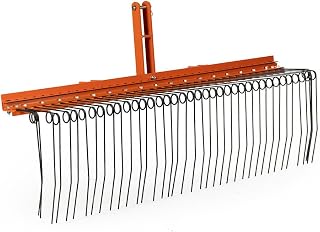 Titan Attachments 3 Point Pine Straw Needle RakeCheck price on Amazon
 Titan Attachments Compact Manure SpreaderCheck price on Amazon
AcreMowerLab earns a commission when you shop through links here. It never changes your price. Affiliate disclosure.
Types of tractor attachments by job
| Attachment type | Job | How it attaches |
|---|---|---|
| Tow-behind lawn sweeper | Collect leaves, grass clippings and dry debris into a hopper | Towed behind the tractor on a hitch pin |
| Tow-behind landscape rake | Gather leaves, pine needles, straw and surface debris | Towed behind the tractor on a hitch |
| Tow-behind aerator | Open compacted soil so air and water reach the roots | Towed behind the tractor, with weight added on a tray |
| Box scraper and grading blade | Level gravel, soil and driveways, backfill and move loose material | Towed or rear-mounted, with an angled blade |
| PTO-driven implements | Tilling, mowing rough ground and other powered work | Rear-mounted and driven by the tractor PTO shaft |
| Front loaders and forks | Lift and carry soil, gravel, brush and pallets | Mounted at the front of the tractor |
| Carts, spreaders and sprayers | Haul material, spread seed or feed, and apply liquid from a tank | Towed behind the tractor on a hitch |
Most acreage owners start with the job that takes the most hours on their land, then add attachments as new jobs appear. The groups below use reference listings for concrete figures where a size or capacity helps.
Tow-behind sweepers for cleanup
A tow-behind lawn sweeper uses spinning brushes to scoop leaves, grass clippings and dry debris into a hopper bag as you drive. Sweeping width and hopper capacity are the figures to compare. The EliteEdge example is 42 inches wide with a stated capacity of 12-26 cu.ft., while the KARHDIR example is 52 inches wide with a 28 cu. ft. hopper. The Suchtale example is also 52 inches wide, with a 26 cu ft hopper, and the Shulemin example is 44 inches wide with a 25 cu ft hopper.
Adjustable brush height matters when you move between lawn, driveway and uneven ground, and a dumping rope lets you empty the hopper from the seat. Folding designs store flatter against a garage or shed wall. For models in this group, see our tow behind lawn sweeper picks.
Rakes for surface debris
A tow-behind landscape rake gathers material that sits on the surface, such as fallen leaves, pine needles, straw and grass clippings, without collecting it into a bag. The ALMULOO example is a 48 inch tow behind landscape rake in powder coated steel, made for tractors with a 2-inch hitch, and the maker describes it for routine cleanup of lawns, gardens and property edges.
Choose a rake when the debris is light and spread out, and a sweeper when you want the material collected and carried away. Our landscape rake vs gravel rake comparison explains how rake styles differ.
Aerators for compacted soil
A tow-behind aerator rolls tines or spikes across the lawn to open compacted soil. The VEVOR example is a 32 inch tow behind aerator with tines that penetrate up to 2 inches deep, as stated by the maker, and a weight tray that supports up to 100 lbs of additional weight to help the tines press deeper. The maker describes it for dry, hard ground as well as clay and sandy soil.
Weight on the tray is part of how this type works, so plan on blocks or sandbags held on the tray rather than loose loads. For models in this group, see our tow behind aerator picks.
Box scrapers and grading blades
Blades move and level loose material such as gravel, soil and snow. The ECOTRIC box scraper (on Amazon) example has a 39.75 inch working width, with a blade that can be locked at a 30-degree angle, and the maker describes it for leveling, backfilling and moving mud, snow and gravel. The FULUPET scrape blade (on Amazon) example is 42 inches wide with 5 angle options, stated as 0, 7.5 and 15 degrees left and right, and it fits a 2 inch receiver for driveway grading and ground leveling.
Angle is what lets a blade push material to the side instead of only forward, so compare the stated angles and working width against the width of your drive or lane. Our box blade uses guide covers driveway and land work in more detail.
Powered and mounted attachments
Beyond tow-behind tools, tractor attachments include rear-mounted implements driven by the PTO shaft, such as tillers and rough-cut mowers, and front-mounted loaders and forks for lifting and carrying. These groups need a tractor with the right mount and power take-off to run them, so the tractor and the attachment have to be matched as a pair. Carts, spreaders and sprayers tow behind on a hitch like the cleanup tools above, and carry material or apply it as you drive.
When you compare any of these types, start with how it attaches: a hitch pin, a receiver, a rear mount or a front mount. Hitch fit is a common reason an attachment will not work with a given tractor, and our types of hitch pins guide explains the pin styles used on tow-behind equipment.
How to choose by property
Match the attachment to the ground you actually have. Wide sweepers and rakes suit open lawn where you can drive long passes, while narrower tools suit beds, fence lines and tight corners. Blades and scrapers suit gravel drives and lanes that rut or wash out. Aerators suit lawns where the soil has packed down from traffic. Storage matters too: folding sweepers store flatter, while wide rigid implements need a shed bay or a covered spot where the blade or tines stay off the ground.
Season also shapes the choice. Sweepers and rakes earn their keep when leaves and debris are down, aerators when the lawn is actively growing, and blades when drives need grading or snow needs moving. Buy for the season in front of you first, and let later seasons add the next attachment.
Safety
Follow your tractor manual for towing limits and slope limits, and never exceed the maker’s maximum slope rating. Keep children, pets and bystanders out of the work area, and carry no passengers. Clear sticks, stones and other debris before you tow or grade, and wear eye and hearing protection and sturdy shoes. Refuel only with the engine off and cool, and shut the engine off before you hitch, unhitch or clear a jammed implement. See our Safety Disclaimer.
FAQ: mowing large lots
What are the main types of tractor attachments?
The main groups are tow-behind cleanup tools such as sweepers and rakes, tow-behind aerators, box scrapers and grading blades, PTO-driven rear implements such as tillers, front loaders and forks, and towed carts, spreaders and sprayers.
How does a tow-behind lawn sweeper attach?
It hitches behind the tractor and rolls on its own wheels, with spinning brushes scooping debris into a hopper. The KARHDIR example is 52 inches wide with a 28 cu. ft. hopper, and the EliteEdge example is 42 inches wide.
What is the difference between a box scraper and a grading blade?
A box scraper carries material inside its box sides as it levels, while a grading blade angles to push material to the side. The ECOTRIC box scraper example has a 39.75 inch working width, and the FULUPET grading blade example is 42 inches wide with 5 stated angle options.
Do tow-behind aerators need added weight?
Many do. The VEVOR aerator (on Amazon) example has a weight tray that supports up to 100 lbs of additional weight, as stated by the maker, to help the tines press into compacted soil.
What should I check before buying a tractor attachment?
Check how it attaches, such as a hitch pin, a 2-inch hitch or receiver, a rear mount or a front mount, then compare the stated working width and capacity against your lawn, drive and storage space.
More mowing guides
- Best Tow Behind Lawn Sweeper Under $250 (2026)
- Best Tow Behind Aerator Under $250 (2026): 5 Picks
- Box Blade Uses for Tractors and Lawns
- Landscape Rake vs Gravel Rake: Which One Should You Buy?
Use the Mower Matcher to narrow down choices by acreage, terrain, budget, and power type.