When to Stop Mowing in the Fall
A practical guide to the final mow of the season: timing by turf dormancy, deck height adjustment, and winter mower preparation.

On this page
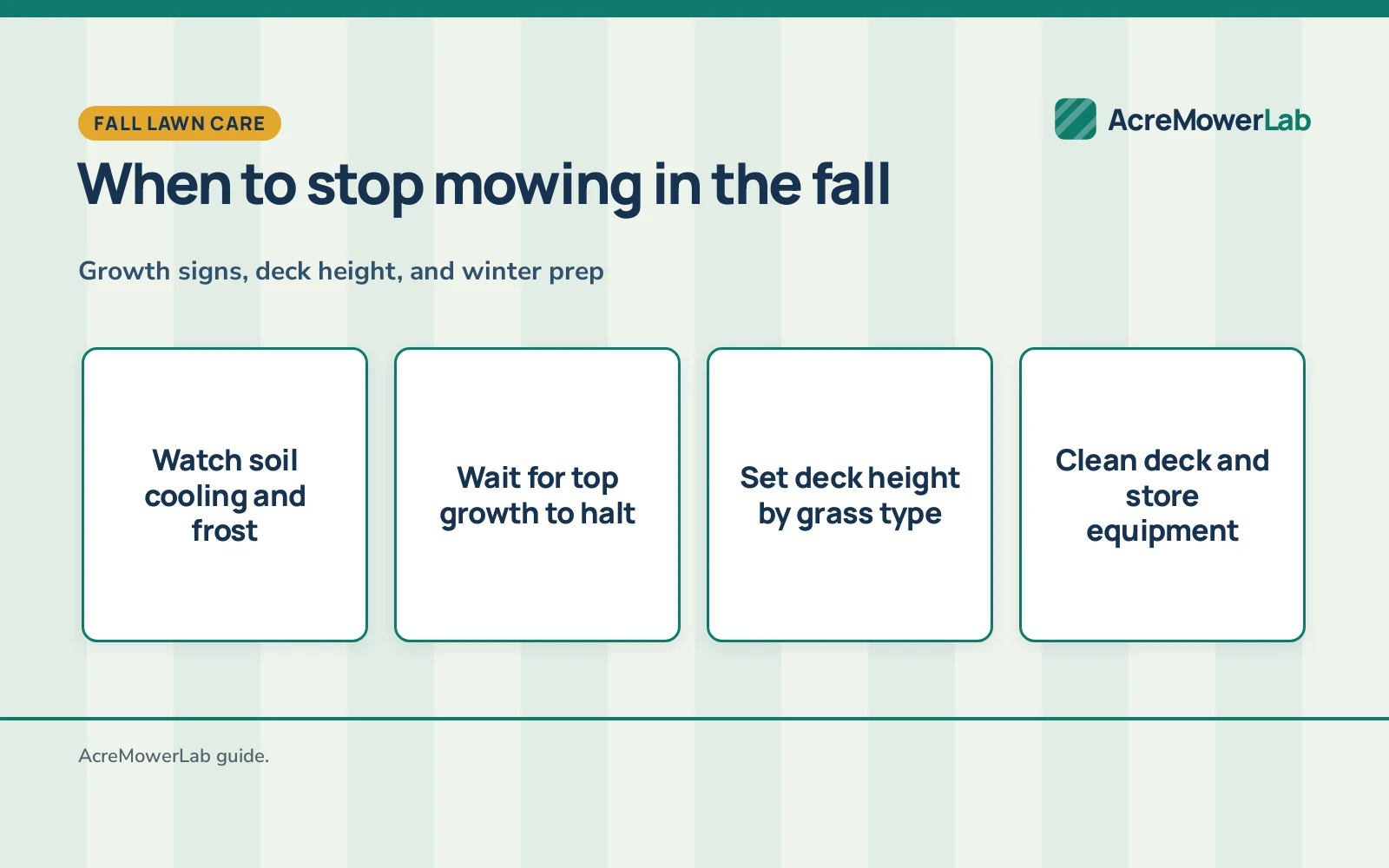
To determine when to stop mowing in the fall, watch your lawn for signs of dormant turf rather than following a calendar date: you should stop mowing when cooler autumn temperatures halt grass growth completely, typically after several hard frosts. Cool-season grasses like Kentucky bluegrass, fescue, and ryegrass stop growing once soil cools down, while warm-season turf like Bermuda and Zoysia slows earlier as daylight wanes. When grass blades cease vertical growth following the arrival of sustained frosty conditions, make your last mow of the season on a dry afternoon and prepare your equipment for winter. This guide covers dormancy signs, deck height adjustments, leaf handling, and winter equipment care.
As an Amazon Associate I earn from qualifying purchases. AcreMowerLab earns a commission when you shop through links here. It never changes your price. Affiliate disclosure.
When to stop mowing in the fall: grass signs and turf types
| Grass type | Dormancy signs | Final cut deck strategy |
|---|---|---|
| Cool-season (bluegrass, fescue, ryegrass) | Growth halts after hard frosts; color dulls | Lower deck slightly on final pass to prevent winter matting |
| Warm-season (Bermuda, Zoysia, St. Augustine) | Growth stops in mid-autumn; foliage turns brown | Keep deck at normal height to insulate crowns from frost |
| Mixed turf on acreage | Uneven growth across open fields and shaded areas | Mow when the tallest-growing grass zones cease gaining height |
| Rough field edges and pastures | Coarse stems stiffen and seed heads dry | Make a final clearance cut before winter rains soften ground |
Different turf varieties enter winter dormancy at different points in the autumn season. Cool-season grasses continue growing until freezing conditions arrive, requiring regular mowing through late autumn. Warm-season varieties shut down earlier when night temperatures turn chilly. If you manage an acre or more of mixed grass, observe the sunny lawn areas to gauge true growth activity. If you need a reliable machine for large lawn areas through the fall change of seasons, see our guide to the best riding mower for 1 acre.
Step 2: track soil cooling and frost dates
Air temperature changes quickly from day to day, but soil temperature controls root activity and leaf growth. According to university extension services, lawn turf does not follow calendar dates; grass responds to soil cooling, moisture levels, and declining daylight. When ground temperatures drop steadily, turfgrass shifts energy storage downward into root structures to survive winter, and vertical blade growth stops.
Watch local frost patterns closely. A light early frost may whiten blade tips on a single cold morning while midday warmth encourages continued growth. A true hard freeze, where conditions remain below freezing for hours overnight, signals full dormancy across cool-season lawns. Once your property experiences several hard freezes and grass blades stop growing, active mowing is finished for the year.
Step 3: adjust deck height for the final pass
Your cutting deck height on the final mow depends on your grass species. For cool-season lawns like bluegrass and fescue, university extension specialists recommend lowering your cutting deck a notch below your regular summer height for the concluding cut. Trimming cool-season blades slightly shorter prevents tall grass from bending and matting under winter snow, which protects the lawn against snow mold infections. Avoid drastic drops, however: scalping exposes turf crowns to freezing winds.
For warm-season lawns like Bermuda, Zoysia, and St. Augustine, university extension services advise against lowering the cutting deck in the fall. Warm-season grasses go dormant and do not recover from late scalping. Maintaining your standard summer cutting height preserves an insulating canopy that shields grass crowns and root zones from winter cold and suppresses winter weeds. To evaluate height settings for your specific turf species, explore our guide on how high should you cut grass in fall.
Step 4: mulch what you can
Fallen leaves left on dormant turf create a thick, wet barrier that blocks sunlight from reaching grass crowns and traps moisture against the soil surface. This damp layer encourages turf rot, fungal mold, and pest damage during winter. Clear thick leaf blankets before putting your mower away for the season.
A mower equipped with sharp mulching blades can chop moderate leaf cover into small pieces that break down into organic matter within the soil. When leaf cover is too deep for mulching, bagging or sweeping the lawn prevents smothered grass. We compare both cleanup methods in our guide on whether it is better to mulch or bag leaves.
Step 5: complete post-mow maintenance and storage
After completing your last cut, servicing your equipment right away prevents rust, fuel issues, and mechanical trouble when spring returns.
- Deck cleaning: scrape wet grass clippings and dirt from the underside of the deck to prevent trapped moisture from corroding metal surfaces. See our guide on how to clean a mower deck for thorough cleaning methods.
- Fuel system care: untreated fuel left in lines and carburetors over winter can degrade and clog jets. Learn whether you should you leave gas in a mower over winter and how stabilizer protects fuel systems.
- Battery preservation: cold temperatures drain batteries in unheated sheds. Disconnect terminals and connect a maintainer in a dry space.
- Blade inspection: remove cutting blades to inspect for nicks and dull edges so you can sharpen them before spring mowing.
- Equipment storage: clean exterior panels, lubricate moving joints, check tire pressure, and store equipment under cover. Follow our walkthrough on how to store a riding mower for winter.
Why calendar dates fail for the final mow
Setting a fixed calendar date to stop mowing often causes problems because autumn weather varies from year to year. A mild, sunny autumn can keep soil warm and turf growing well past standard expectations. Stopping too early leaves tall grass that bends, mats down, and invites fungal disease over winter. Conversely, an early cold wave can stop grass growth ahead of schedule. Let lawn growth and soil conditions guide your final mow rather than a date on the calendar.
Risks of stopping too early or mowing too late
Timing the final mow requires avoiding both seasonal mistakes. Stopping while grass is still actively growing leaves tall foliage that mats down under winter precipitation, suffocating crowns and encouraging fungal infections. Excessively tall winter turf also provides shelter for rodents that tunnel under cover and chew root structures.
Mowing after freezing weather sets in or cutting the lawn excessively short causes severe winter injury. Scalping turf removes the protective canopy that insulates crowns and root zones from sub-freezing air, leading to winterkill and delayed spring green-up. In addition, operating heavy machinery across frozen or waterlogged soil crushes brittle dormant blades and leaves compacted ruts across your yard.
Plan large properties in zones
Managing acreage requires a structured approach because large properties feature multiple microclimates. Low-lying areas collect cold air and frost, shaded tree lines warm slowly, and open pastures dry faster under wind.
Divide your property into zones before the final mow. Plan late-season passes by zone as autumn progresses: complete drainage swales and low-lying pasture edges earlier in the season before late-autumn rains make the soil soggy. On any mowing day, wait until sunlight has fully dried low-lying or shaded turf before operating machinery. For acreage owners comparing equipment options across large acreage, our reviews of riding mowers cover deck widths, transmissions, and power options for diverse terrain.
Mind the weather and the ground
Autumn weather requires extra patience. Frozen morning grass is brittle: tires and shoes break frozen turf blades, leaving visible damaged trails that linger until spring. Never mow when frost covers the grass. Wait until afternoon warmth melts frost and dries blade surfaces before cutting.
Soggy autumn ground is equally hazardous. Wet soil causes mower wheels to spin and slide, creating gouges in the lawn and posing safety hazards on hills. Choose a clear, dry afternoon for your final seasonal pass.
Safety
Operating mowers in late autumn calls for careful safety habits. Wear eye and hearing protection, along with sturdy boots. Before mowing, walk the lawn to clear fallen tree limbs, hidden rocks, and debris that could strike blades. Keep children, pets, and bystanders away from the work area.
On slopes, never exceed your machine manufacturer maximum slope rating, and avoid wet inclines where tires lose grip. Disengage mower blades before traveling across gravel drives or operating in reverse. Shut down the engine and let it cool completely before refueling or storing equipment in a garage. Follow all maker safety instructions before operating machinery.
FAQ: mowing large lots
What happens if you stop mowing too early in the fall?
Grass continues growing and enters winter tall. Long blades mat down under snow and rain, creating a damp environment that breeds snow mold and attracts burrowing lawn pests.
Can you mow the lawn after the first frost?
Yes, but wait until the afternoon when frost has melted and the lawn is dry. A single light frost does not stop grass growth, so additional mowing may be needed until hard freezes arrive.
How short should the last mow of the season be?
For cool-season grass, lower your cutting deck a notch below summer height on the final pass to prevent winter matting and snow mold. For warm-season turf, maintain standard summer height so the foliage can insulate dormant crowns from cold weather.
Should you bag or mulch clippings on the final mow?
Mulching works well if clippings and leaf fragments are light. If grass is tall or leaf cover is heavy, bag or rake the debris to prevent smothering dormant turf.
When should riding mowers be put into winter storage?
Store your riding mower once top growth halts and the final cut is complete. Clean the deck underside, preserve the fuel system, service the battery, and inspect blades before winter sets in.
More mowing guides
- Best Riding Mower for 1 Acre: 4 Picks by Deck Size
- How High Should You Cut Grass in Fall?
- How to Store a Riding Mower for Winter
- Should You Leave Gas in a Mower Over Winter?
Explore our riding mowers section to compare deck sizes, tractor attachments, and seasonal lawn equipment for your acreage.