How Long Do Zero Turn Mowers Last?
A practical guide to zero-turn mower lifespan, focusing on engine hours, hydrostatic drive maintenance, deck care, and seasonal storage on acreage.

On this page
Top picks at a glance
As an Amazon Associate I earn from qualifying purchases.
- 1
 Husqvarna MZ619.7/10View on Amazon
- 2
 EGO Power+ Z6 Zero Turn Electric Riding Lawn Mower9.6/10View on Amazon
- 3
 EGO Power+ Z6 Zero Turn Electric Riding Lawn Mower9.6/10View on Amazon
To understand how long do zero turn mowers last, look at cumulative operating hours, maintenance discipline, and build quality rather than calendar years. A zero-turn mower lasts until its engine, hydrostatic drive, or cutting deck wears beyond practical repair. Machines given regular lubrication, fresh filters, proper cooling airflow, and dry shelter outlast neglected units across many seasons. This guide explains how each assembly influences lifespan and how to prolong reliability on your acreage.
AcreMowerLab earns a commission when you shop through links here. It never changes your price. Affiliate disclosure.
How long do zero turn mowers last: understand the main components
A zero-turn mower relies on several mechanical assemblies working under heat and vibration. When evaluating longevity, prioritize the core systems below.
| Assembly | Role in lifespan | Service priority |
|---|---|---|
| Powertrain | Drives blades and propulsion systems | Clean oil, air filtration, cooling fin clearing, and battery care |
| Hydrostatic drive | Powers rear wheels for steering and travel | Fluid cleanliness where serviceable, cooling fan care, belt tension, and slope limits |
| Cutting deck | Houses spindles and shields the operator | Underside deck scraping, spindle greasing, and blade balancing |
| Chassis and casters | Supports weight across uneven ground | Wheel bearing lubrication, tire checks, and frame inspection |
For replacement items, review our zero turn mower parts guide to identify essential maintenance components.
Step 2: track engine hours and oil service
Engine condition dictates when many zero-turn mowers reach the end of their operating life. Combustion engines generate intense heat during continuous mowing across thick turf. Motor oil lubricates pistons, bearings, and valves while carrying heat away from friction surfaces. Over time, heat and contamination break down oil viscosity, accelerating internal wear.
Check the dipstick before every mowing pass and change oil according to your equipment manual. In dusty conditions, inspect the air intake canister regularly. A clogged air filter starves the engine of combustion air and lets fine dirt score cylinder walls. Keep cooling fins around engine cylinders clear of dried clippings and chaff so cylinder heads do not overheat.
Step 3: maintain hydrostatic transmissions and fluid
Hydrostatic drive systems represent the most expensive components on a zero-turn mower. Unlike lawn tractors that steer with front wheels and drive through a single transaxle, a zero-turn relies on two independent hydraulic drive assemblies to power and steer each rear wheel separately. This setup provides agile steering but generates substantial hydraulic fluid heat.
Hydraulic fluid breakdown remains a frequent cause of transmission failure. As fluid degrades from heat, pump pressure drops, causing sluggish steering and power loss on slopes. Many residential mowers feature sealed transaxles with non-serviceable fluid, where internal wear eventually requires replacing the entire transaxle. On sealed units, keeping cooling fins and fans clean is your primary defense against heat breakdown. Commercial mowers feature serviceable hydraulic systems with external filters and reservoirs allowing routine flushes. Keep transaxle cooling fans free from debris, and consult our guide on how to fix hydrostatic drive on riding mower issues when noticing steering drift.
Step 4: protect the mower deck and spindle bearings
The cutting deck endures severe abuse from flying debris, dirt, and wet grass clippings. Stamped decks are pressed from sheet metal, while fabricated decks use thick welded steel plates that resist denting, cracking, and warping on rough acreage.
Spindle assemblies hold spinning blades and rotate at high speeds. When clippings pack around spindle housings, trapped moisture corrodes bearing seals. Scrape the deck underside after mowing damp turf and wipe away debris from spindle tops. If your spindles include grease zerks, pump fresh grease into bearings at regular intervals. Bent blades cause vibration that destroys bearings and cracks welds. Follow our walkthrough on how to clean a mower deck and inspect cutting edges according to our advice on how often should you sharpen mower blades.
Step 5: replace wear parts before they cause damage
Drive belts, idler pulleys, control linkages, and front caster assemblies experience constant friction and ground shock. Replacing these wear parts before total failure prevents damage to engine crankshafts, deck pulleys, and frame welds.
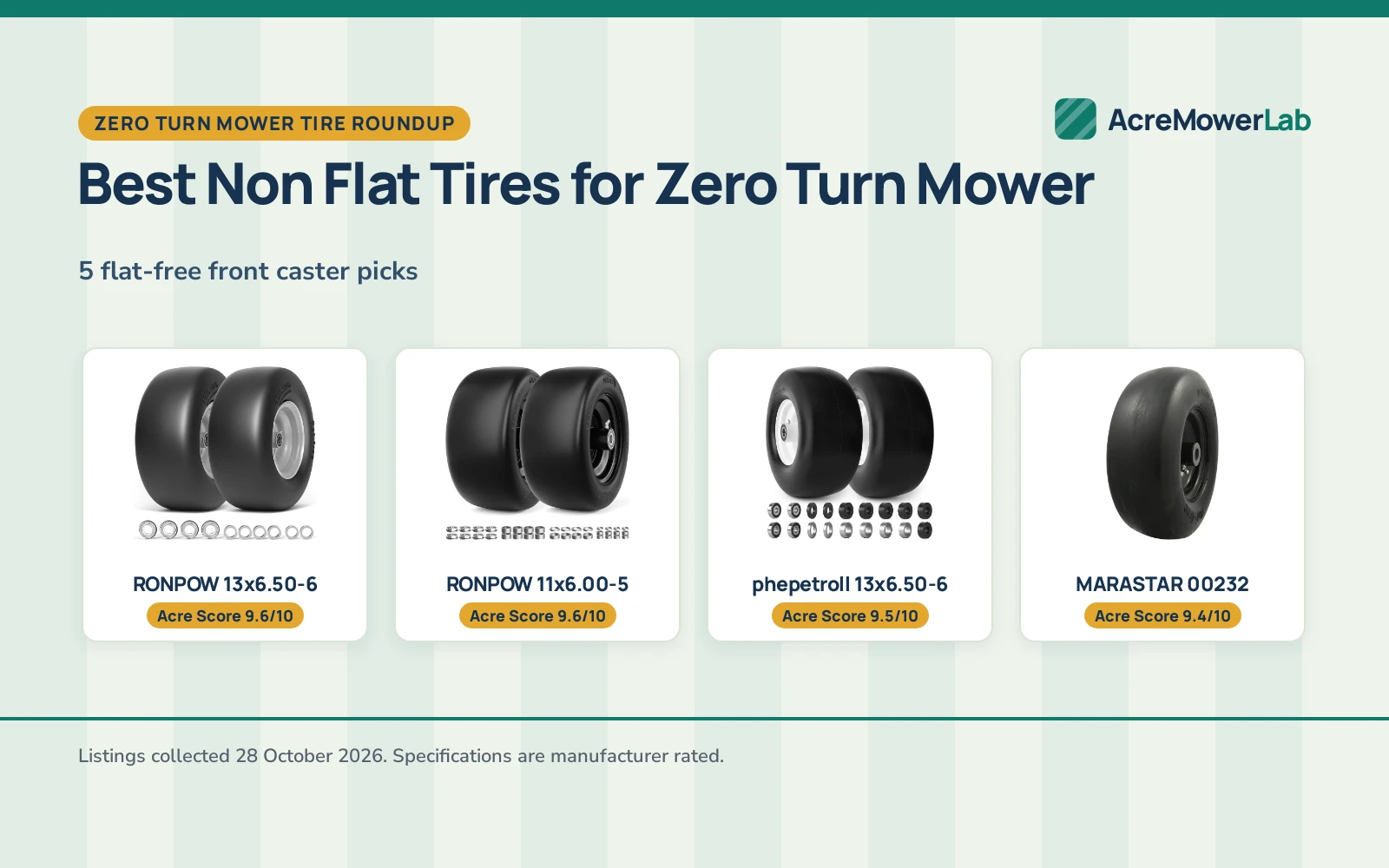
Front caster tires absorb repetitive impact on rough acreage. The GICOOL brand publishes a 9×3.50-4 smooth front tire and wheel assembly made of solid polyurethane foam featuring a 330-pound dynamic load capacity and a 1-year manufacturer warranty. Solid flat-free tires eliminate punctures, though comfort depends on smooth bearings. For larger front wheel setups, Roueoo publishes a 13×6.50-6 flat-free front tire with an 8.6-inch rim, rated for a 500-pound load capacity (with 520 pounds listed in its spec table) and backed by a 1-year manufacturer warranty. Roueoo highlights upgraded sealed bearings that repel moisture and clippings. For steering lever control, Greater Zero publishes the Zero-Turn Bar with a 2-year warranty, requiring 11.25 inches of horizontal bar width for mounting between control handles. When steering levers loosen or bearings develop play, renew hardware promptly.
Pick a sheltered storage location
Where and how you park your zero-turn mower between mowing sessions significantly influences operating life. Moisture damages electrical wiring, safety switches, steel decks, and bearing seals. Machines stored outdoors exposed to rain suffer rusty deck shells, seized pulleys, and corroded connectors.
Park your mower inside a dry shed or garage whenever possible. Sun exposure also degrades plastic cowlings, fuel lines, and seating. For sun protection on machines with rollover structures, Proenclosures publishes the EHS LitePro shade canopy constructed from high-density polyethylene weighing under 20 pounds that mounts to square or rectangular ROPS tubing between 1.5 and 3 inches wide, supported by a 1-year manufacturer defect warranty. Before cold weather arrives, prepare your fuel system and battery properly: consult our guides on how to store a riding mower for winter and should you leave gas in a mower over winter.
Match the mower to the property workload
Lifespan depends heavily on matching machine capability to acreage workload. Residential zero-turn mowers are engineered for smooth home lawns with moderate mowing hours. Using a residential machine on multi-acre properties with rough ground, brush, or steep ditches causes rapid structural and hydraulic fatigue. For heavy workloads, commercial zero-turn mowers offer heavier steel frames, serviceable hydro systems, and larger engine displacement. Explore our best commercial zero-turn mower roundup and our analysis on what size zero turn do I need for my acreage.
Towing heavy accessories also accelerates transmission wear. For yard cleanup, PPOLB publishes a 42-inch tow-behind lawn sweeper (with product width listed at 48 inches in its spec table) featuring an 18.55 cubic foot hopper (listed as 25.16 cubic feet in the spec table) and weighing 70.6 pounds, backed by a 1-year manufacturer warranty. Towing loaded sweepers on flat lawns works well, but towing excessive weight up hills overheats hydrostatic drive pumps. Heavy ground-engaging work belongs on agricultural tractors rather than zero-turns. For instance, Titan Attachments publishes a Category 1, 3-point hitch 63-inch flail mower (with cutting width listed at 47 inches in the spec table) built for tractors with 25 to 45 horsepower running a 540 RPM PTO shaft, weighing 462 pounds. Pushing a zero-turn beyond its intended work envelope shortens usable life.
Plan mowing patterns across the property
Operator technique directly influences machine durability. Executing sharp pivot turns where an inside drive tire remains stationary tears turf and places high torsional stress on wheel motor shafts and transaxle gears. Instead, practice gentle Y-turns or teardrop turns, keeping both rear drive tires rotating smoothly through changes of direction.
Vary your mowing paths across successive cuts. Mowing in identical ruts packs down soil and subjects deck edges and casters to repetitive jarring in the same low spots. Inspect the mowing area before starting, avoiding exposed rocks or high roots that scalp turf and bend blade spindles. For operating recommendations, read our guide on how to use zero turn mower equipment properly.
Mind the weather and the ground
Operating in wet grass strains belts, clogs discharge chutes, and forces engines to labor under heavy resistance. Wet turf also reduces drive wheel traction, leading to wheel slip that scuffs sod and spikes transaxle temperatures. Allow grass to dry before mowing, and avoid operating near drainage ditches or boggy spots where a zero-turn can lose grip.
Ground slope and battery technology also require careful management. While specialized remote-control slope equipment like the Mowrator 4WD is rated for slopes up to 40 degrees (an 85 percent grade) with a 21-inch cutting width, a 56V 18Ah lithium iron phosphate battery providing up to 2.25 hours of runtime, and a 2-year manufacturer warranty, riding zero-turn mowers must never be operated on steep slopes. Riding zero-turns depend on rear drive tires for propulsion and braking, so steep or wet inclines cause loss of control. For electric mowers, storing batteries at moderate temperatures and avoiding deep discharge cycles helps maximize battery lifespan. If you are comparing electric options, see our best battery for zero turn mower review.
Safety
Zero-turn mowers require careful safety practices. Never exceed the maker’s maximum slope rating for your machine. Zero-turn mowers rely on rear wheel traction for both braking and steering, meaning they can easily lose traction on steep slopes and near ponds or drainage ditches. Always keep the rollover protective structure (ROPS) locked upright and fasten your seat belt where equipped. Never carry passengers, and ensure children and pets remain completely out of the mowing area while equipment operates.
Disengage mower blades before pulling steering levers into reverse. Clear sticks, rocks, wire, and loose debris before mowing to prevent projectile hazards, and always wear eye and hearing protection along with sturdy footwear. Refuel gas equipment only with the engine off and completely cool to reduce fire risk. Before mowing rolling terrain, read our safety review on are zero turn mowers safe on hills.
FAQ: mowing large lots
What causes a zero-turn mower to wear out early?
Premature failure stems mainly from running with low or contaminated oil, transaxle overheating from debris-packed cooling fins, packed clippings under the deck that corrode spindle seals, and mowing rough terrain that bends spindles or strains drives.
How can you tell if hydrostatic transmissions are failing?
Warning signs include sluggish response when pushing steering levers forward, loss of drive power when climbing slopes, machine pulling or drifting toward either side on flat ground, and whining hydraulic noise from overheated fluid.
Does washing a mower deck shorten spindle bearing life?
Spraying pressurized water directly at spindle housings can force water past bearing seals, washing out grease and promoting rust. Scraping dried clippings with a putty knife or using compressed air provides safer cleaning without endangering bearing lubrication.
Are commercial zero-turn mowers more durable than residential models?
Commercial models feature heavier welded steel frames, thick fabricated cutting decks, serviceable hydrostatic drive pumps with external filters, and commercial-grade engines built for continuous duty. Residential mowers use lighter stamped decks and sealed transaxles suited for smaller home lawns.
How does winter storage affect zero-turn mower lifespan?
Storing a mower in a damp location allows condensation to collect in fuel tanks, corrode wiring, and rust the cutting deck. Stabilizing remaining fuel, storing the battery in a dry space, and cleaning the deck before winter protects vital components until spring.
More mowing guides
- Zero Turn Mower Parts: Maintenance and Replacement Guide
- How to Fix Hydrostatic Drive on Riding Mower
- How to Use Zero Turn Mower: Beginner Operation and Safety Guide
- Best Commercial Zero-Turn Mower: 4 Picks for 5 to 10 Acres
Use the Mower Matcher to narrow down choices by acreage, terrain, budget, and power type.