How to Repair Garden Hose
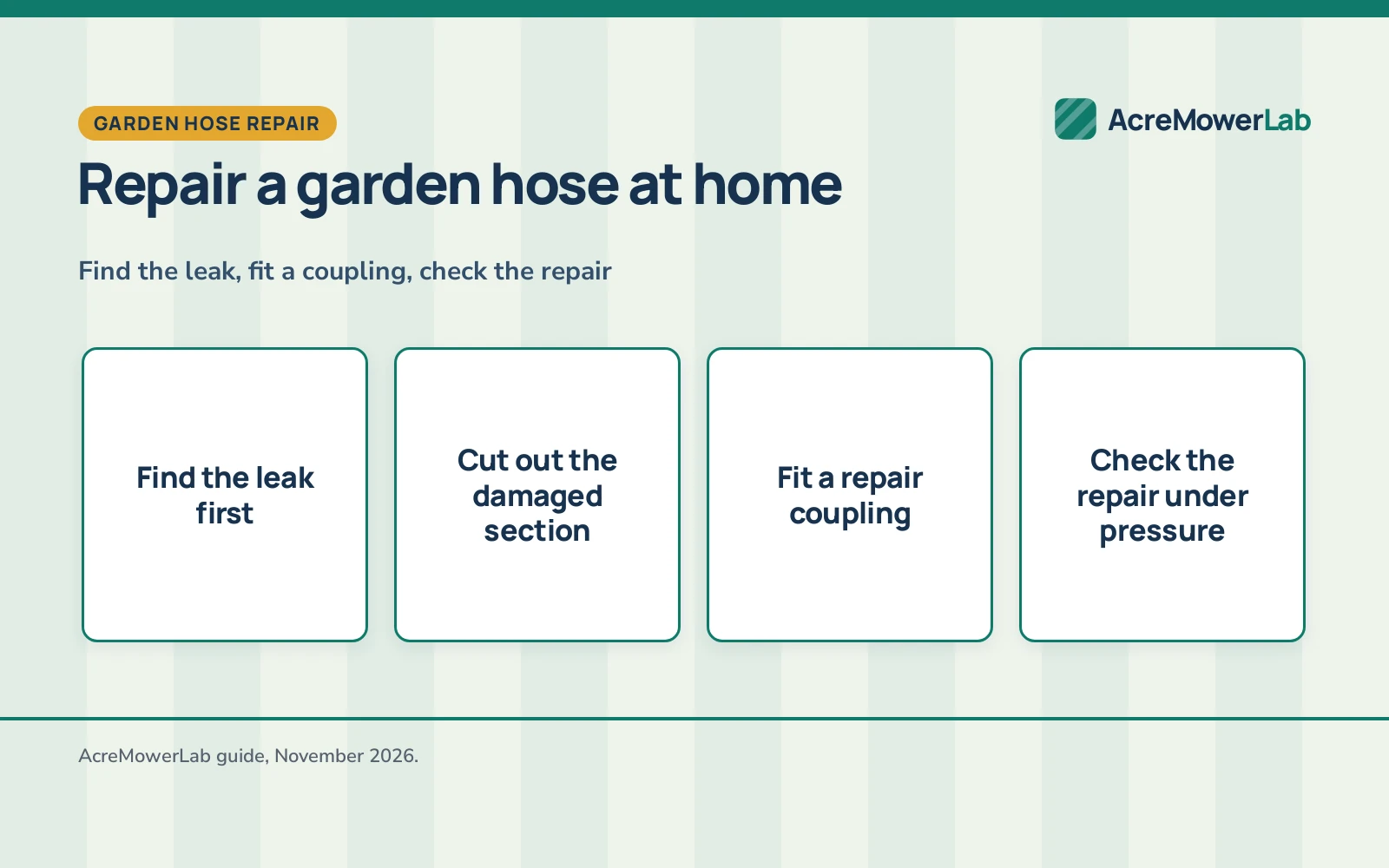
A step-by-step plan to find a garden hose leak, cut out the damaged section, fit a repair coupling and check the repair before the hose goes back to work.

On this page
Top picks at a glance
As an Amazon Associate I earn from qualifying purchases.
- 1
 Beitopamz Metal Garden Hose 100 ft with Brass Fittings9.7/10View on Amazon
- 2
 SPECILITE Garden Hose 50 ft with Solid Brass Fittings9.6/10View on Amazon
- 3
 ARBUTUS Rubber Garden Hose 50 ft with Brass Connector9.5/10View on Amazon
- 4
 Premium Garden Hose Repair WashersView on Amazon
- 5
 Black + Decker® 25 ft x 5/8 inView on Amazon
- 6
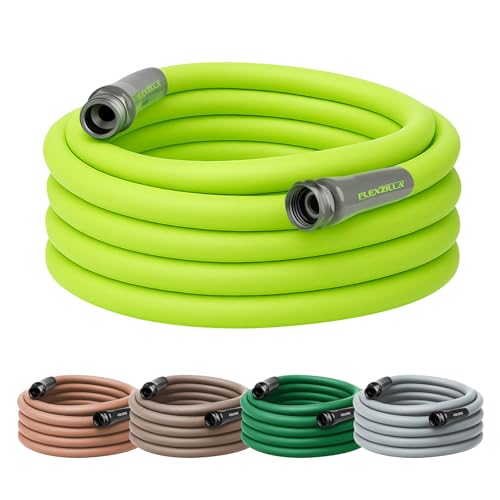 Flexzilla Garden Hose 5/8 in. x 50 ft.View on Amazon
- 7
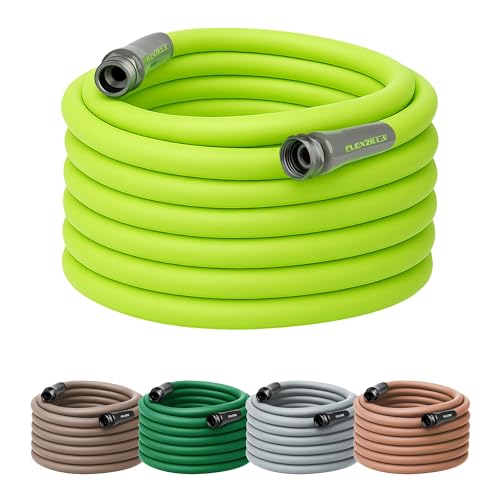 Flexzilla Garden Hose 5/8 in. x 75 ft.View on Amazon
- 8
 Flexzilla Garden Lead-in Hose 5/8 in. x 10 ft.View on Amazon
- 9
 Flexzilla Garden Hose 5/8 in. x 100 ft.View on Amazon
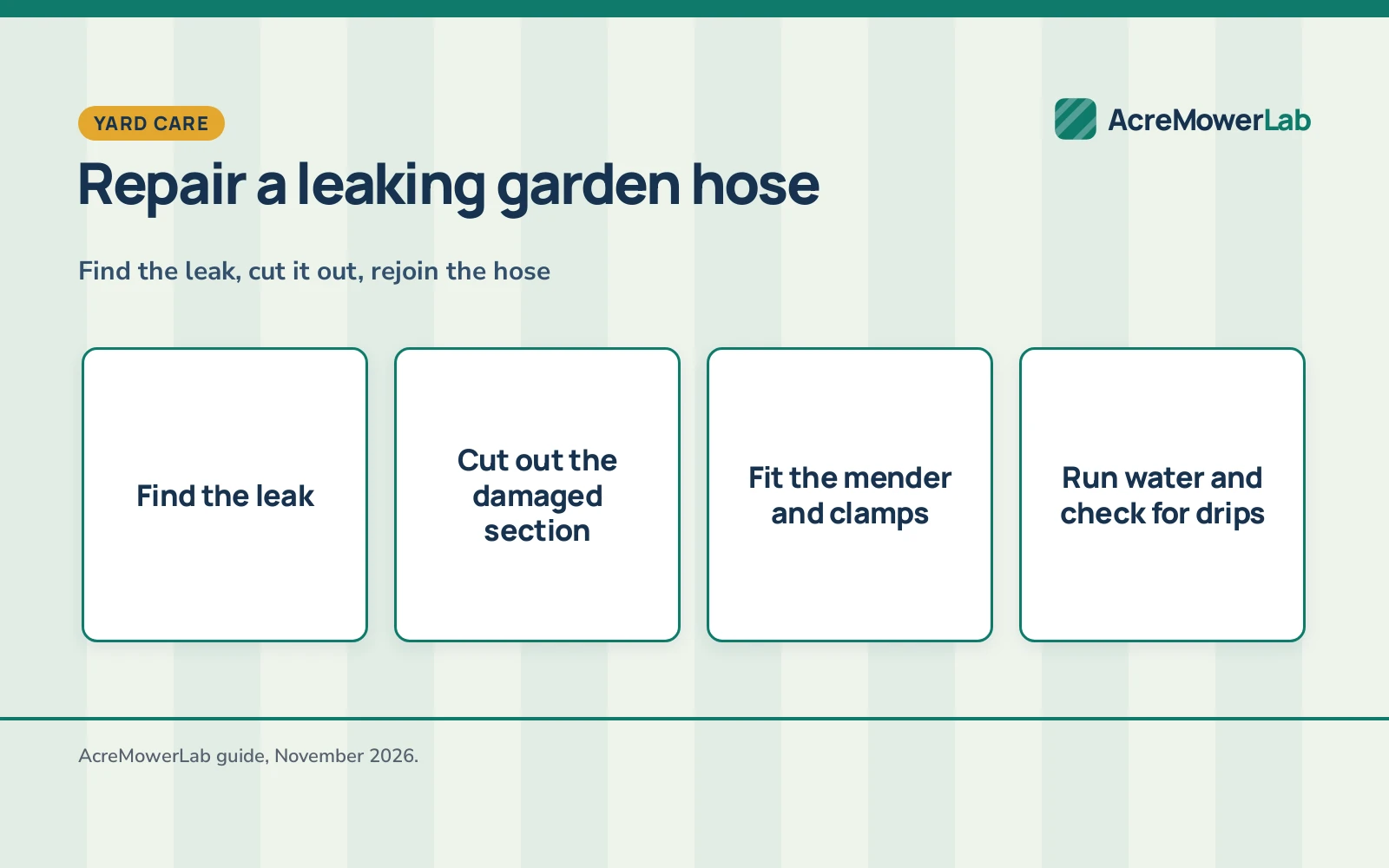
This guide explains how to repair garden hose leaks: find the leak, cut out the damaged section, fit a repair coupling in its place, and run water through the hose to check the repair. Common hose damage is a split, a puncture or a worn fitting, and each of these has a matching repair. Work through the steps in order, and check the repair before the hose goes back to work.
Other machines to compare
 Premium Garden Hose Repair WashersCheck price on Amazon
 Black + Decker® 25 ft x 5/8 inCheck price on Amazon
 Flexzilla Garden Hose 5/8 in. x 50 ft.Check price on Amazon
 Flexzilla Garden Hose 5/8 in. x 75 ft.Check price on Amazon
 Flexzilla Garden Lead-in Hose 5/8 in. x 10 ft.Check price on Amazon
 Flexzilla Garden Hose 5/8 in. x 100 ft.Check price on Amazon
AcreMowerLab earns a commission when you shop through links here. It never changes your price. Affiliate disclosure.
How to repair garden hose: find the leak
Turn the water on at the tap and walk the length of the hose, watching for spray, drips and wet patches on the ground. A small puncture can throw a fine spray that is easy to miss, so run a hand along the hose and feel for wet spots and escaping water. Check the fittings at each end as well: a drip at the tap or at the nozzle can come from a worn washer rather than a hole in the hose. Mark each leak with tape or a marker so the spot stays visible after the water is off.
| Damage | Repair | Use it when |
|---|---|---|
| Small puncture | Cut out the hole and join with a repair coupling | The rest of the hose is sound |
| Split section | Cut out the split and join with a repair coupling | The split is short and the wall around it is sound |
| Leaking fitting | Replace the washer, then the fitting if the drip stays | The hose itself holds water |
| Kink that stays bent | Cut out the kinked section and join with a repair coupling | The kink has weakened the wall |
Leaks often show up where the hose bends, rubs or gets run over, so look closely at bends, at the tap end and where the hose crosses paths and driveways. A leak that only shows under pressure may stay hidden with the water off, so keep the water on while you look.
Step 2: cut out the damaged section
Turn the water off at the tap and let the hose drain. Cut the hose on each side of the damage and take the damaged piece out. A sharp utility knife or hose cutter gives a clean, straight edge; a ragged edge can keep a coupling from sealing. Keep the cuts close to the damage, so the finished hose stays as long as it can.
Step 3: fit a repair coupling
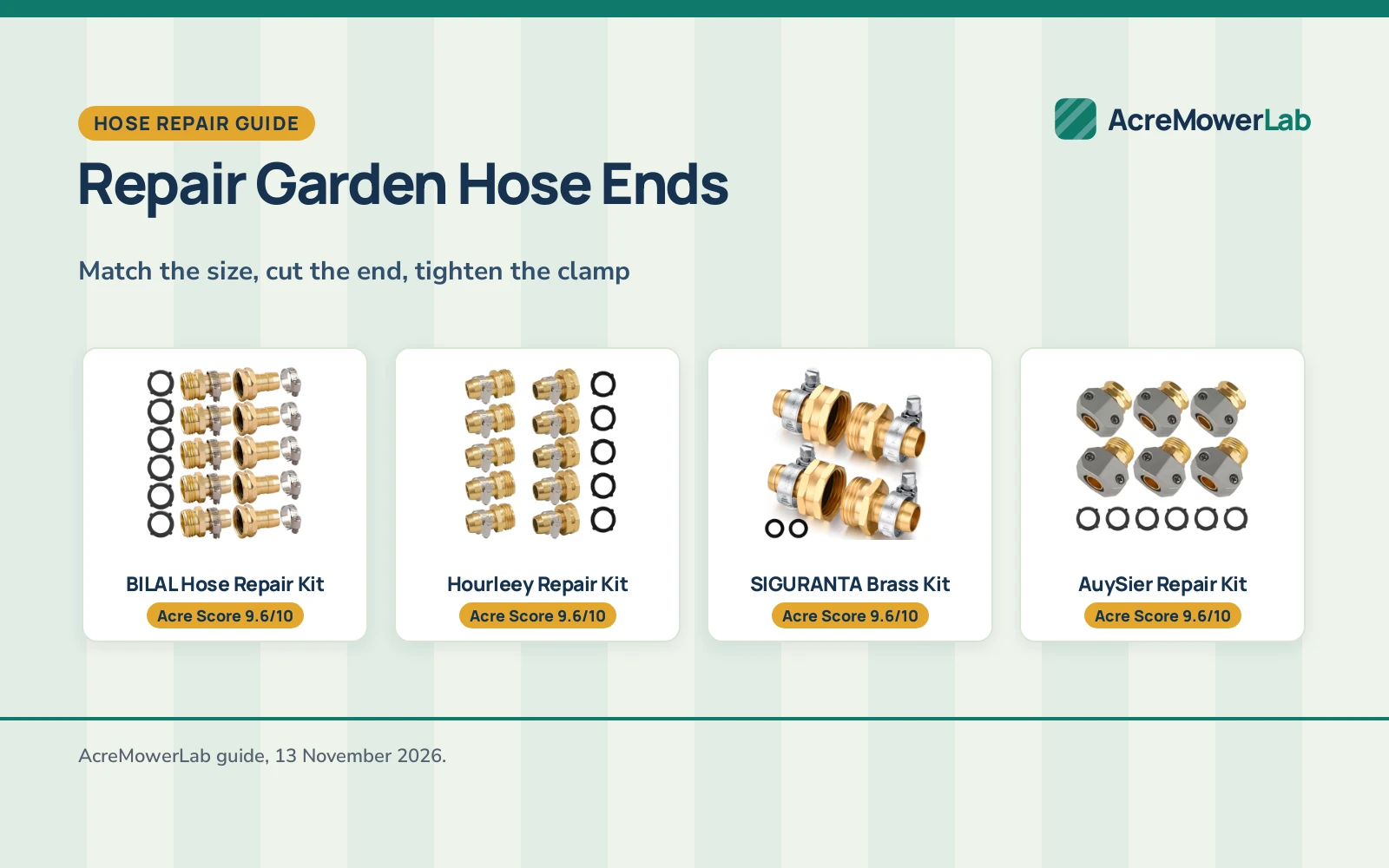
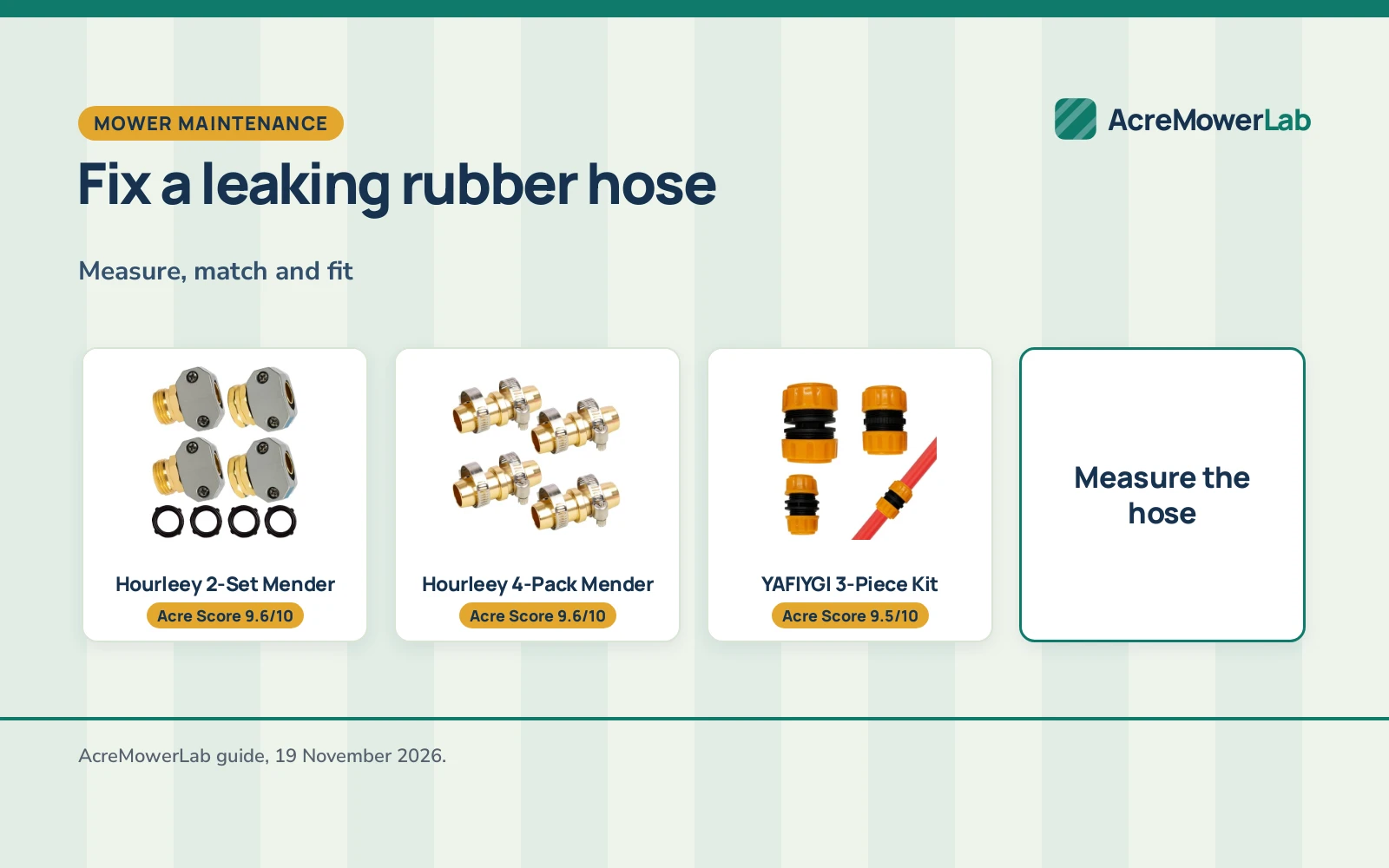
Push the hose ends fully into the repair coupling, then tighten the clamps snugly so the joint holds against water pressure. On a clamp type coupling the hose ends sit inside a sleeve and the clamps hold them there; other coupling designs push or screw together instead, so use the method that matches the coupling you bought. Do not over-tighten the clamps: a clamp driven too tight can cut into the hose wall and start a new leak. Work over a bucket or a lawn area, since water left in the hose can spill while the ends go in. See the water hose guides for coupling and fitting options that suit a garden hose.
Step 4: fix a leaking fitting
Start with the washer: unscrew the fitting, lift the old washer out and press a new washer of the same shape into place. If the drip stays, the fitting itself may be worn or cracked, so unscrew it and fit a new hose-end fitting in its place. Tighten the new fitting by hand until snug; forcing it tighter with pliers can crush the washer or crack a plastic fitting and make the leak worse.
Step 5: check the repair under pressure
Turn the water on slowly and watch the repair while the hose fills. Look for drips at the coupling and at the fittings, and feel along the joint for escaping water. If the joint drips, turn the water off and check the cut edges and the clamp seating before tightening further: a ragged edge or a coupling that does not match the hose will keep dripping no matter how tight the clamps are. A joint that stays dry under full pressure is holding; check it again the next time the hose is in use. A joint that keeps dripping needs the coupling taken apart and refitted.
When to replace the hose instead
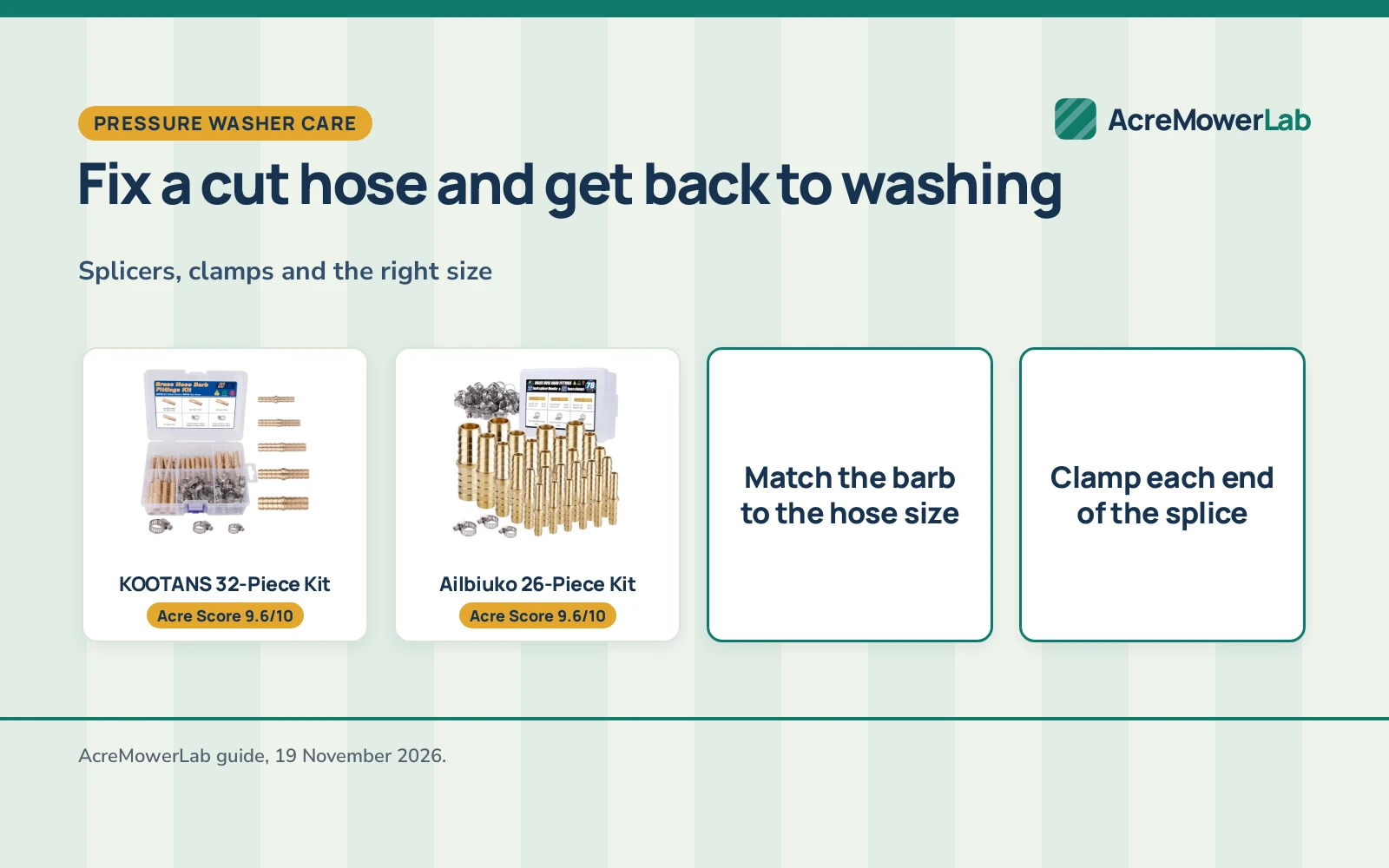
A hose with damage along its whole length or with cracks in the outer wall is past repair. A corroded or seized fitting can be cut off and replaced with a new hose-end fitting, so a bad fitting alone does not mean the hose is finished. A repair coupling also makes the hose shorter, so a hose that has already been cut and repaired may end up too short for the yard. If the hose feeds a pressure washer, check the washer inlet fitting too; see the pressure washer guides.
Store the hose so it lasts
Drain the hose after each use and coil it in wide loops on a reel or a wall holder. A hose left full of water in the sun can weaken over time, and a tight coil can kink the wall at the bend. In cold weather, drain the hose and store it under cover so water left inside cannot freeze and split the wall. A hose reel with quick-connect fittings keeps the hose coiled and off the ground, which cuts down on dragging and kinks; see the garden hose reel quick connect picks.
Safety
Wear gloves and eye protection when cutting a hose, and keep the blade away from hands and body. Turn the water off before cutting, and keep the work area clear of tools and hose ends underfoot. Never point a hose or a spray nozzle at people or animals, and keep children and pets away from the work area while the hose is under pressure.
FAQ: mowing large lots
Can a garden hose be repaired instead of replaced?
Yes, in most cases. A split or puncture in the middle of the hose takes a repair coupling, and a drip at the end takes a new washer or a new fitting.
How do I find a leak in a garden hose?
Turn the water on and walk the hose, watching for spray and wet patches and feeling for escaping water. Check the fittings at each end as well, since a drip there can come from a worn washer. Mark each leak so the spot stays visible after the water is off.
What kind of coupling fits a garden hose repair?
A repair coupling made for garden hose, sized to the hose. Clamp types hold the hose ends inside a sleeve, while other types push or screw together, so use the method that matches the coupling you bought. Check that the joint stays dry under pressure.
Why does a hose fitting keep leaking?
A worn washer is the common cause: the washer flattens with age and stops sealing against the tap or the nozzle. A cracked fitting or threads that seat unevenly can also drip. Replace the washer first, then the fitting if the drip stays.
How do I keep a repaired hose from leaking again?
Drain the hose after each use, coil it in wide loops and keep it out of direct sun. Avoid kinks and do not leave the hose where wheels or foot traffic can crush it. Check the repair when the hose goes back into use, and if a drip shows, find where it comes from before tightening anything further: a drip at a fitting points to the washer, while a drip at a coupling points to the cut edge or the clamp seating.
More mowing guides
- Best Irrigation Nozzles (2026): 4 Picks Compared
- Best Rain Sensor (2026): 4 Picks for Sprinkler Systems
- Best 100 Gallon Rain Barrel (2026): 4 Collapsible Picks
- Best Rain Barrel Spigot (2026): 5 Picks for Rain Barrels
- Best Garden Oscillating Sprinkler (2026): 5 Picks Compared
- Best Metal Oscillating Sprinkler (2026): 5 Picks Compared
- Best Hose for Rain Barrel: 4 Picks for Stored Rainwater
- Best Pump for Rain Barrel (2026): 4 Picks Compared
- Best Irrigation for Trees (2026): 5 Picks Compared
- Best 6 Zone Sprinkler Controller (2026): 5 Picks for Lawns
- Best Smart Sprinkler Controller (2026): 5 Picks for Lawns
- Steel vs Plastic Landscape Edging: Which One Should You Buy?
- Best Garden Hose with Brass Fittings (2026)
- Best In-ground Sprinkler Heads (2026): 4 Picks Compared
- Best Irrigation Pump (2026): 5 Picks for Lawns and Gardens
- Best Blowers for Lawn Care (2026): 5 Cordless Picks
- Best Irrigation Valves (2026): 5 Picks for Lawn Zones and Drip Lines
- Best Drip Irrigation Timer (2026): 5 Timers Compared
- Best Garden Drip Irrigation System (2026): 5 Picks for Beds and Lawns
- Best Smart Hose Timer (2026): 5 Picks for Lawns and Gardens
- Best Hose Reel Cart (2026): 5 Picks for Yards and Gardens
- Best Irrigation System (2026): 5 Picks Compared
- Brass vs Plastic Impact Sprinkler: Which One Should You Buy?
- Smart Sprinkler Controller vs Timer: Which One Should You Buy?
- Impact Sprinkler vs Oscillating Sprinkler: Which One Should You Buy?
- Best Rain Water Barrel (2026): 4 Picks Compared
- Best Irrigation Sprinkler Heads (2026)
- Mechanical vs Digital Hose Timer: Which One Should You Buy?
- Best Rain Gauge (2026): 5 Picks for Yard and Garden
- Spray vs Rotor Sprinkler Head: Which One Should You Buy?
- Tree Watering Bag vs Soaker Hose: Which One Should You Buy?
- Best Oscillating Sprinkler (2026)
- Drip Irrigation vs Sprinkler: Which One Should You Buy?
- Best Irrigation Controller: 5 Picks for Lawn Watering
- Soaker Hose vs Sprinkler: Which One Should You Buy?
- Pop Up Sprinkler vs Impact Sprinkler: Which One Should You Buy?
- Water Hose Repair Kit: Find the Leak and Rejoin the Hose
- Best Water Hose Guides (2026)
- Best Garden Hose Reel Quick Connect (2026): 5 Fitting Sets
- Best Water Hose Quick Connect Kit (2026): 5 Kits Compared
- Best Garden Hose Flow Meter (2026): 5 Picks for Watering and RV Filling
See the irrigation guides for watering gear that pairs with a repaired hose.